Get Full Government Meeting Transcripts, Videos, & Alerts Forever!
Get email alerts on the Police Oversight topic
No spam. Unsubscribe anytime.
Board of Supervisors votes to consent to mayor’s removal of police commissioner Max Carter Overstone after hours of public comment
Summary
The Board of Supervisors voted 9–2 on Feb. 25 to consent to Mayor Daniel Lurie’s removal of Police Commissioner Max Carter Overstone following a packed public hearing with dozens of speakers urging both retention and removal.
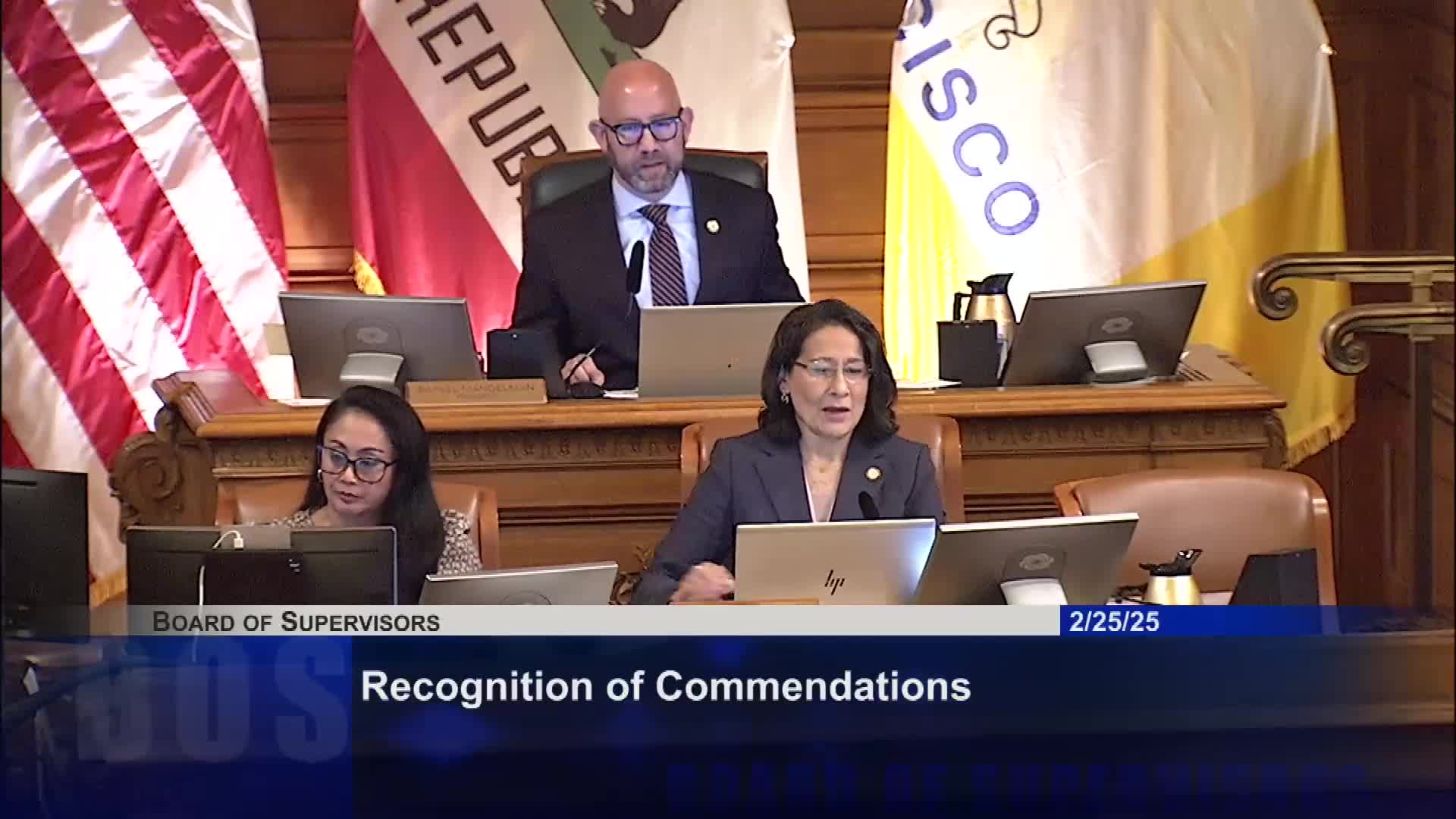
The San Francisco Board of Supervisors on Feb. 25 voted 9–2 to consent to Mayor Daniel Lurie’s request to remove Police Commissioner Max Carter Overstone, capping a daylong public hearing that drew more than a hundred speakers and widespread media attention.
The vote came after roughly four hours of public comment and a 10‑minute address from Overstone, who said he had used his term to demand accountability and independent oversight of the San Francisco Police Department. “My first and only obligation is to the people of San Francisco, not to any politician or political cause,” Overstone told the board during his remarks. He asked supervisors to defend “the public’s right to honest and independent oversight.”
Why it matters: The police commission is the civilian body charged with setting policy and providing oversight of the SFPD. San Francisco voters have repeatedly endorsed independent oversight in recent years; removal of a commissioner before the end of a term is rare and drew intense public scrutiny. Supporters of Overstone said his work on policies such as limiting pretext traffic stops advanced accountability. Opponents, including the mayor, argued the executive should be able to appoint commissioners aligned with the administration.
What happened at the hearing: The board heard well over a hundred public commenters for and against the mayor’s request. Many community leaders, civil‑liberties groups and public defenders urged supervisors to reject the removal and allow Overstone to complete his term; law‑enforcement and pro‑public‑safety speakers urged consent. The ACLU of Northern California, the San Francisco Public Defender’s Office and other advocacy groups urged the board to protect independent oversight. Several speakers said the move was politically motivated; others said the mayor was exercising charter authority.
Legal process and vote: The mayor’s authority to remove an appointee to the police commission is governed by Section 4.109 of the city charter, which requires the mayor to obtain the board’s consent for removals of mayoral appointees. After amendments to the procedure were handled on the floor, the final roll call on item 22 as amended recorded nine ayes and two noes, with Supervisors Myrna Melgar and Jackie Fielder voting no. The clerk recorded: “There are 9 ayes and 2 nos, with supervisors Melgar and Fielder voting no.”
What supporters and critics said: In public comment and in board remarks, proponents of retention said Overstone had used data and collaborative processes to craft policy and that removing him would chill independent oversight. “He provides painstaking, unbiased, and thoughtful oversight,” said Angela Chan, former police commissioner and assistant chief attorney at the Public Defender’s Office. Supporters noted his role in the general order limiting pretext stops and in other policy reforms.
Those favoring the mayor’s request argued that police commissioners are mayoral appointees who generally serve at the pleasure of their appointing authority and that the mayor deserves the ability to make his team. “Mayor Lurie has earned, by virtue of his election, the right to make an appointment of his choosing,” Supervisor Matt Dorsey said before moving to consent to the removal; he added he had seen no reason to dissent.
What this will mean: The removal immediately opens a seat on the police commission for the mayor’s nominee, subject to the board’s later confirmation processes. The debate underscored continuing tension in San Francisco over the balance between elected executive authority and independent civilian oversight of policing.
Context and next steps: The hearing occurred amid citywide discussion about public safety, recent high‑profile incidents involving police pursuits, and the aftereffects of a decade of policing and oversight reforms. The board’s consent does not itself name a replacement; the mayor may submit a nominee for board confirmation at a later date.
Ending note: The vote finished a day of extended public testimony and intense debate over the future of civilian oversight in San Francisco.