Get Full Government Meeting Transcripts, Videos, & Alerts Forever!
Get email alerts on the Custodial Consent topic
No spam. Unsubscribe anytime.
Senate committee approves bill declaring detainees cannot legally consent to sex with officers
Summary
The committee approved a bill to add a statute declaring a person in police custody incapable of consenting to sexual activity with law-enforcement officers; sponsors said the law closes a legal loophole, while witnesses urged clear definitions and penalties.
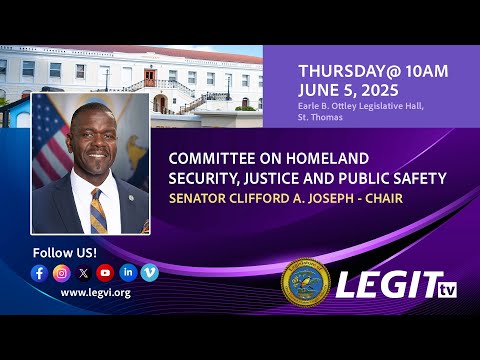
The Committee on Homeland Security, Justice and Public Safety voted June 5 to advance Bill No. 36-0024, a measure that would add a new section to Title 14 of the Virgin Islands Code declaring that a person who is detained, under arrest, or otherwise in police custody is incapable of consenting to sexual relations with a law-enforcement officer.
Senator Ray Fonseca, sponsor of the measure, said the bill closes a legal loophole that has allowed officers in other jurisdictions to claim encounters were consensual when a power imbalance made genuine consent impossible. "There should be no gray area when it comes to power, coercion, and sexual exploitation," Fonseca said.
Deborah Hodge, acting chief of police for the St. Thomas-St. John district, testified in support and recommended the statutory language use the broader term "law enforcement officer" so all sworn personnel are covered. Hodge referenced the 18 U.S.C. 2243(c) federal statute and said the territory should align local law with that standard; the federal statute makes consent an invalid defense when the accused is a federal officer and the victim is in custody.
Attorney General Gordon Ray told the committee the Department of Justice supports the goal of the bill and recommended the committee consider drafting that creates a specific criminal offense and appropriate penalties rather than only addressing consent; he also suggested mandatory reporting and administrative tracking so agencies can detect patterns of misconduct.
Julie Smith Toddman, chief territorial public defender, raised drafting questions about how the bill defines "custody," noting that courts typically apply a fact-specific "reasonable person" test (Miranda-era tests) to determine custody in other contexts and that the measure should make its standard explicit to reduce ambiguity.
Senators debated definitions, possible penalties, and whether the statute should be limited to persons physically restrained or broader to include those "detained" for questioning. After some amendments were discussed and the sponsor indicated follow-up language would be made available, the committee recorded a favorable vote (4 yes, 3 no) and forwarded the bill to Rules and Judiciary.