Get Full Government Meeting Transcripts, Videos, & Alerts Forever!
Get email alerts on the Career And Technical Education topic
No spam. Unsubscribe anytime.
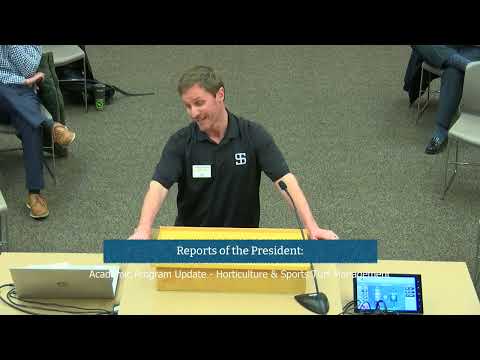
Southeast Tech presents horticulture and sports turf program updates, highlights retention and industry partnerships
Summary
Horticulture technology and sports turf management instructors reviewed curricula, internships, retention rates and community partnerships, noting about 75–80% retention and multiple industry connections that support internships and national competition travel.
Benjamin Ringling, horticulture technology instructor at Southeast Technical College, told the board the horticulture and sports turf management programs share foundational coursework in the first year and then diverge into specialized classes, internships and hands-on labs.
Ringling said the programs average "right around 75 to 80% retention rate," and described curriculum details from herbaceous plant identification and greenhouse production to turf chemicals, irrigation and specialized equipment training for sports turf students. "Safety is all the way across the board for both programs," he said, noting use of heavy equipment and required personal protective equipment training.
The presentation emphasized experiential learning: greenhouse production and plant sales for horticulture students, and on-campus facilities for sports turf students that include a tee box, fairway and green used as lab spaces. Ringling highlighted recent student industry experiences, including internships and placements with professional sports teams and golf courses. He also said community and industry partnerships — including donations that raised $8,000 to send students to a national conference in San Diego — are critical to the programs.
Ringling described enrollment and program sequencing by semester, noting one new spring-start cohort and that internships often extend into summer. He summarized program goals: integrated pest management, professional communication, technical skills, collaboration and plant identification. He said horticulture students run three plant sales annually and work with Master Gardeners and regional industry groups.
Board members asked about job placement and artificial turf. Ringling said placement varies by student interest and field; horticulture graduates go into floral, farms, nurseries, landscaping and parks departments (including Sioux Falls Park and Rec), while turf students often pursue sports-field positions. On artificial turf, he said the topic "is on the radar" because many schools pursue artificial surfaces; his students generally preferred natural or hybrid turf for professional venues but noted smaller schools often choose artificial turf for minimal maintenance.
The board formally acknowledged the academic program update by motion and vote.