Get Full Government Meeting Transcripts, Videos, & Alerts Forever!
Get email alerts on the Education Instructional Resources topic
No spam. Unsubscribe anytime.
Davidson County Schools outlines K–12 instructional programs, funding sources and costs
Summary
District curriculum staff reviewed more than 20 instructional platforms and curricula used across K–12, described funding streams (state PRC codes, federal grants, ESSER) and flagged several multi‑year contracts that will need new funding when COVID-era ESSER dollars expire.
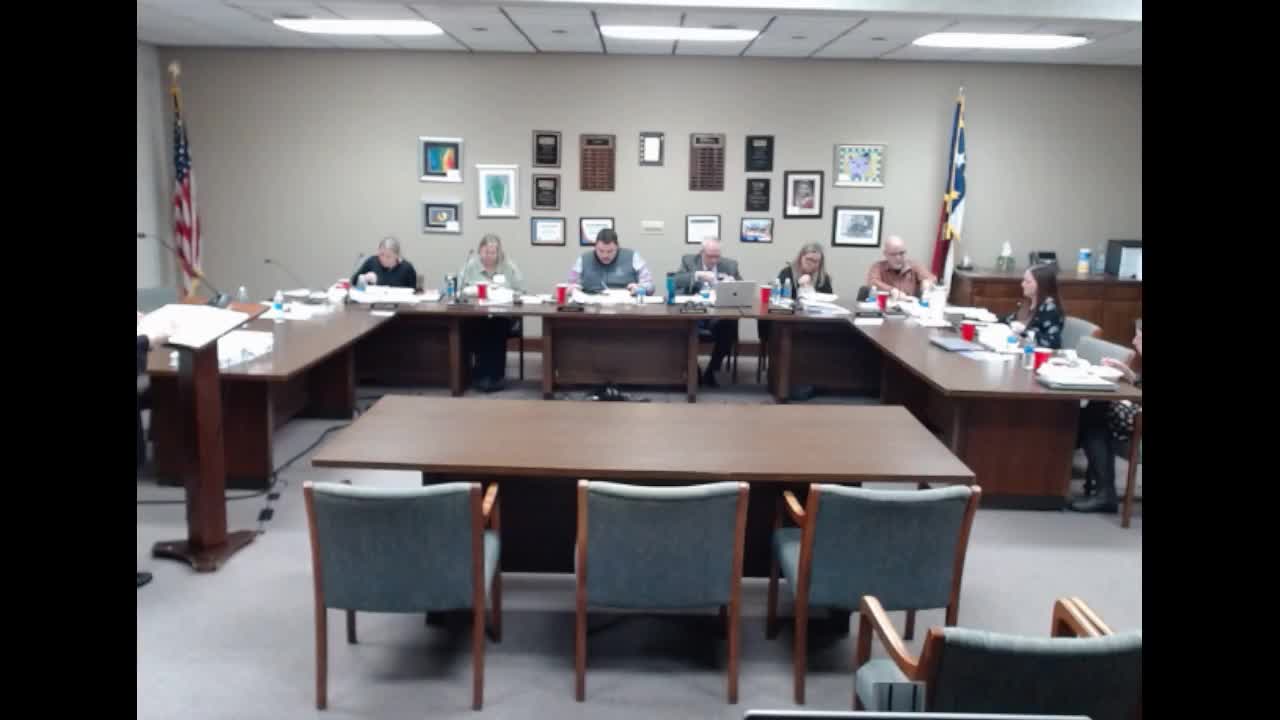
Davidson County Schools curriculum staff gave the school board an overview of K–12 instructional materials and digital platforms on Oct. 27, listing the programs in use, the dedicated funding sources that pay for them and several upcoming contract decisions.
The presentation, delivered by Dr. Coley (district curriculum staff), detailed literacy, math, science, language and adaptive curricula and named the state and federal object codes used to pay for them — for example PRC 85 for K–3 literacy, PRC 50 for Title I set‑aside funds, Title IV (PRC 108) for social‑emotional/character curricula, and ESSER funds used temporarily for several diagnostics and platforms.
Dr. Coley said the district currently maintains roughly two dozen instructional subscriptions and curricula that serve different grade spans and purposes and that several of those purchases were paid with one‑time pandemic ESSER funds that now are ending. “We are constantly gathering feedback from teachers on the resources. We’re constantly looking at our data to see the impacts,” Coley said. “If we’re not utilizing the materials, the resources that we purchase, then we have to look at other ways to utilize those funds.”
Most used programs, who pays for them
The district’s K–5 literacy assessment is MCLASS (DIBELS), which Dr. Coley said is purchased statewide by the North Carolina Department of Public Instruction and will be required K–5 for beginning/middle/end of year screening. LETRS (Lexia’s professional development) is required for elementary teachers; the program requires about 160 hours of training across multiple units, and the district funds substitutes and some release time from PRC 85 literacy funds.
Other K–5 resources named by the presenter include Letterland (phonics) paid from PRC 85; HEAL RAP (a phonics intervention) funded from PRC 50 Title I set‑aside; Studies Weekly for social studies paid from state textbook funds; and Freckle (Renaissance) and i‑Ready (teacher toolbox) used as screeners and individualized learning platforms. Dr. Coley said i‑Ready was renewed on a multi‑year contract paid with ESSER through 2025–26 and that Freckle (universal screener) was funded with ESSER and will sunset at the end of the current school year.
The district purchased Exact Path for grades 6–8 (and for some high school foundation math) on a two‑year ESSER contract through 2025–26, and Number Worlds (an intervention program for students with math challenges) on a three‑year contract funded with federal TSI grant money through 2026–27. UNIQUE Learning System (adaptive curriculum for students on the state extended content standards) has been paid with ESSER recently and will shift back to EC (special education) federal and state funds when ESSER ends, the presenter said.
For secondary grades the district named McGraw Hill StudySync for grades 9–12 ELA (paid from state textbook funds), Envision Math as the digital core for high school math (paid from PRC 069/state at‑risk funds), and Edgenuity for credit recovery (state at‑risk funds). Turnitin is used in high school courses to screen for unoriginal work and potential AI use; Dr. Coley said the district funds Turnitin from state at‑risk funds.
Costs and contract timing
Coley gave several cost examples: the i‑Ready three‑year renewal was about $175,000; the Freckle contract was characterized as “over $200,000” and paid per student; and Discovery Education (the district’s K–12 digital science resource) costs about $277,000 a year, the presenter said. Several of those contracts were purchased with ESSER dollars and will require decisions on replacement funding once ESSER ends.
Board members asked how the district decides among many available tools and about consistency across teachers. Coley said resources are vetted before purchase, sometimes piloted in a single classroom or grade team, and evaluated through teacher feedback, usage reports and PLCs. She noted past adoption challenges — including a multi‑million dollar math adoption seven years ago that teachers rejected — as a caution when considering large, single‑vendor adoptions.
On curriculum vetting and teacher use, Coley said: “You have to get in there, and you’ve got to go find it. It takes a little time. This is using these resources and pulling those lessons is what we do during professional learning communities.” She also told the board, “You don’t use it, you lose it. That’s the mantra.”
English learners, translation and staffing
Coley described expanded English‑learner growth and said the district uses Title III (PRC 54 and PRC 104) and some at‑risk funds to pay for bilingual dictionaries, ELL resource libraries, iPads for newcomers and an online lesson–planning platform for ESL teachers. She said the district conducts an annual EL headcount that determines Title III allocations and that the district currently has roughly 11 languages represented among students; the district employs two translators during the school year and outsources translation services (Verbatim) in summer months.
Operational context and next steps
Board members and staff emphasized that many of the line items are restricted by statute or by federal grant rules. “These are specific object codes that are specific to things that we can spend our money on,” a board member observed during the discussion. Coley said most federal and state grant budgets pay for personnel first and that the district prioritizes staffing because “it’s people, it’s teachers, it’s interventionists that make the difference with our students, not programs.”
The presentation closed with a reminder that the district will return to the board with annual federal grant approvals that show how Title I, II, III and IV dollars are allocated between personnel and resources.