Get Full Government Meeting Transcripts, Videos, & Alerts Forever!
Get email alerts on the Education Academics Behavior topic
No spam. Unsubscribe anytime.
Bolivar Intermediate highlights I‑Ready incentive push and behavior work; principal reports gains in student engagement
Summary
Bolivar Intermediate School principal reviewed academics and behavior work: an incentive program tied to I‑Ready lessons drove thousands of student lessons after winter break, and school leaders described an MTSS approach to behavior with a focus on executive function skills and early identification.
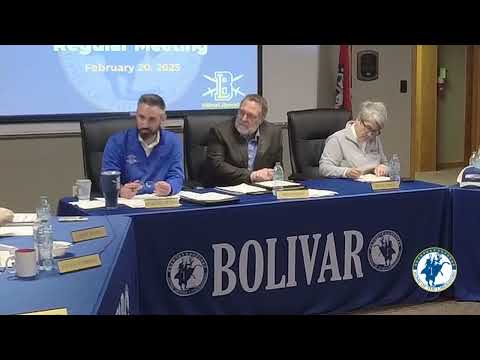
Sabrina Campbell, principal of Bolivar Intermediate School (BIS), presented a second‑semester update on curriculum and behavior interventions during the board's CSIP spotlight.
Campbell said BIS uses Eureka Math, Benchmark literacy resources and Mystery Science, and described a new emphasis on aligning instruction to standards. She highlighted a recent student incentive program using the I‑Ready platform: students scoring 80–100% on assigned I‑Ready lessons submitted tickets to vote for a principal to wear an inflatable mascot; the contest raised student engagement and lesson completion.
"In January, students completed 3,596 lessons," Campbell said, adding that February had yielded an additional 2,568 lessons before weather closures — "collectively, since we've been back from Christmas break, students have engaged in 6,164 lessons."
Campbell and instructional coaches are using multiple data sources to target interventions, including benchmark assessments and MAP scores, and using the data to plan RTI (response to intervention) supports. BIS has been mapping standards to assessment questions to pinpoint instructional gaps and plan small‑group interventions.
On behavior, Campbell said the school is intentionally teaching executive‑function skills (self‑control, perseverance, time management and empathy) with weekly "I can" statements and counselor‑led lessons. Her office tracks office discipline referrals (ODRs) by tier: first‑quarter Tier 1 (0–1 ODRs) had 532 students and second quarter had 528; Tier 2 (2–4 ODRs) had 25 and 26 students respectively; Tier 3 (more than 4 referrals) had 7 then 5 students. Campbell said the stability of those numbers shows the school’s MTSS (multi‑tiered system of supports) framework is in place but still being refined.
Rick (presenter: dissertation researcher at BIS) shared preliminary findings from an applied research dissertation focused on BIS behavior supports. He said teachers reported far more training and clarity around academic standards than around behavior management, echoing national research that many teachers feel undertrained on behavioral interventions. His recommendations included expanding Tier 1 behavior instruction, providing teachers with consistent behavior screening tools (to identify internalizing as well as externalizing concerns) and strengthening teacher training on classroom‑level behavior supports.
Campbell said the school plans events including concerts, open house and reading night in the spring and that testing windows for MAP and EOC are approaching; teachers and students will practice the testing tools before formal administration.
The board thanked BIS staff for the engagement strategies and data‑driven interventions; no formal action was required on the spotlight presentation.