Get Full Government Meeting Transcripts, Videos, & Alerts Forever!
Get email alerts on the Industrial Siting Deadlines topic
No spam. Unsubscribe anytime.
Committee extends some industrial‑siting timelines for wind and solar projects; cure period set at 45 days, ISC hearing window extended
Summary
The Minerals, Business & Economic Development Committee recommended Senate File 154, which adjusts deadlines in the industrial‑siting process for large wind, solar and other projects; the committee adopted an amendment setting the applicant cure period to 45 days and retained a 120‑day ISC hearing window.
Senate File 154, a bill that adjusts several deadlines in the industrial‑siting process for large wind, solar and other jurisdictional projects, received a do‑pass recommendation from the Minerals, Business & Economic Development Committee after discussion with county officials and the Industrial Siting Division.
What the bill changes
The measure alters timelines in state statute and county code that govern when county governments must hold public hearings and how long the Industrial Siting Council (ISC) has to process applications. The sponsor said the intent is to give local governments and the ISC more predictable time to prepare for complex projects without creating long new delays.
Key amendments and final language
Committee members adopted a substitute amendment during the hearing. The committee ultimately replaced the bill’s proposed 60‑day cure period with a 45‑day cure period for applicants to correct deficiencies (page 3, line 16 as amended). The bill retains an extension of the ISC’s hearing window to 120 days on the back end, and sets an effective date of Jan. 1, 2026 so currently pending projects are not affected retroactively.
Reasoning and testimony
Senator Bridal Bohnerson (bill sponsor) said counties and the ISC have seen a surge in large renewable and industrial filings and asked for modest additional time for public processes and intergovernmental coordination. Jenny Staven, administrator of the Industrial Siting Division, told the committee the division operates with roughly three full‑time equivalent staff and typically receives applicant responses on the last permitted day under current rules. Staven recommended keeping the ISC’s longer hearing window while avoiding unnecessarily enlarging the department’s initial review timeline; the committee’s compromise mirrored that suggestion.
County and landowner views
Commerce County Commissioner Robert Short and representatives of the Wyoming Farm Bureau said counties need additional, predictable time to prepare impact assistance requests and to negotiate memoranda of understanding. Witnesses emphasized the change is intended to improve permit readiness and public participation, not to slow projects intentionally.
Committee action and vote
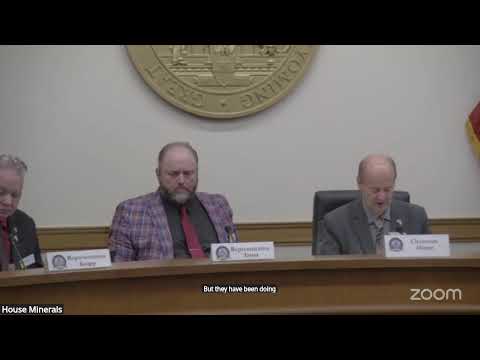
Representative Lally moved the amendment that set the cure period to 45 days; Vice Chair Tarver seconded. The committee voted to recommend Senate File 154 as amended; roll call showed eight ayes and one excused.
Ending
The bill moves to the floor with a committee recommendation. The sponsor, county officials and ISC staff said the change balances processing workload with the need for robust local review; the bill will take effect Jan. 1, 2026 if enacted.