Get Full Government Meeting Transcripts, Videos, & Alerts Forever!
Get email alerts on the School Protection Officers topic
No spam. Unsubscribe anytime.
Bolivar R‑I holds public forum on school protection officer program; district to weigh training, costs and safeguards
Summary
Bolivar R‑I trustees and school staff hosted an open forum on a state-authorized school protection officer program. Deputy Mike Smith summarized training requirements, estimated costs and ongoing qualification rules; several residents urged implementation while others stressed mental-health and coordination concerns.
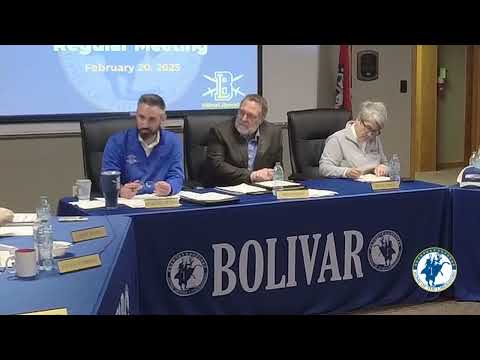
Deputy Mike Smith, a school resource officer and the district's safety and security coordinator, gave an overview of Missouri's school protection officer program and training requirements during an open forum before the Bolivar R‑I board meeting.
Missouri allows districts to designate certain employees to carry concealed on campus after completing an initial 120‑hour training program approved by the Missouri Department of Public Safety, Post (Police Officer Standards and Training), Smith said. He described the program as ongoing, with quarterly range qualification and continuing education modules that include de‑escalation, first aid, legal limits on use of force, day/night stress qualifications and threat assessment training.
"The training just doesn't stop with that hundred and 20 hours," Smith said. He added that school protection officers must "qualify four times a year," and that the state can remove certification if the quarterly requirements are not met.
Why it matters: The district is exploring options to expand on-campus safety without immediately changing staffing or district policy. Smith and others framed the program as a way to add trained, concealed responders inside school buildings — an option some residents said could deter attackers — while others urged careful policy design and post‑incident mental‑health supports.
In public comment, Dusty Ross, a Bolivar resident and former local police officer, said he supports the program if properly implemented. "If something bad were to happen, he's probably way more qualified than I am," Ross said of experienced school staff who might serve as protection officers, adding that the increased number of trained, armed people in a building could be a deterrent. Ross also urged local law enforcement and any designated school protection officers to train together so responders recognize authorized individuals during an incident.
Pam Cornelius, who said she is a former teacher and federal employee, also urged the district to place a trained, armed person in each building. "We need to have someone armed in each building of the school here in Bolivar," Cornelius said, referencing national shootings and the Uvalde incident as reasons for more on‑site protection.
Other public commenters, including Brent Watkins, emphasized the need for mental‑health post‑incident care for staff who might intervene in a critical incident. "It's one thing to plan for an incident. It's another thing to respond to it," Watkins said, asking the board to include post‑incident counseling and support in any program plan.
Smith gave a ballpark on costs reported by other districts: initial 120‑hour training per individual (presented in the forum as roughly $4,597 per person) and quarterly qualification fees of about $267 per person. He said many districts also offer an annual stipend (often about $1,500) for staff who take on the role; the district would set a local process for volunteers and qualification.
Board next steps and limits: District officials said the forum was informational and that the board will consider public feedback as it determines whether to adopt a school protection officer program, what application and selection criteria to use, and which local policies would govern the position. No motion or formal vote to adopt the program was taken at the meeting.
The presenters and several public commenters noted limits to district authority: POST certification and quarterly qualifications are state‑monitored, and failure to maintain certification can remove designation. Smith also noted course providers must be approved by Missouri DPS POST.
What remains open: The board did not set a timeline for a policy decision, nor did it adopt specific local policies for selection, disclosure of who carries, or integration with local law enforcement. The forum included repeated requests from commenters that any future plan include clear coordination protocols with police and robust mental‑health and post‑incident supports for staff.
The board stated it will consider the feedback as it decides whether to move forward with a school protection officer program and what policies to adopt if it does.