Get Full Government Meeting Transcripts, Videos, & Alerts Forever!
Get email alerts on the Religious Freedom topic
No spam. Unsubscribe anytime.
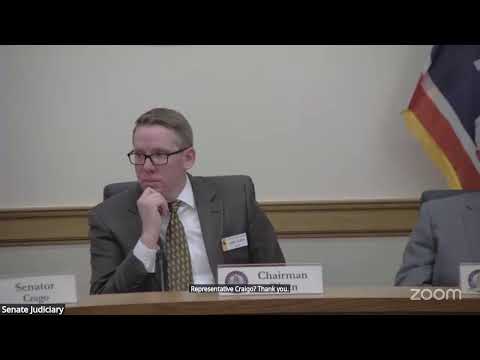
Senate Judiciary Committee advances Religious Freedom Restoration Act with ‘substantially’ amendment
Summary
Representative Josh Washak, the bill sponsor, told the Senate Judiciary Committee on Oct. 27 that House Bill 207 would restore the stricter “compelling interest/least restrictive means” standard for state actions that burden religious exercise.
Representative Josh Washak, the bill sponsor, told the Senate Judiciary Committee on Oct. 27 that House Bill 207 would restore the stricter “compelling interest/least restrictive means” standard for state actions that burden religious exercise. “This law simply takes us back to a standard that was in place in our country for decades of strict scrutiny when it came to governmental interference with religious freedom,” Washak said at the committee hearing.
The measure would apply to actions by state or local government that substantially burden a person’s exercise of religion, require the government to show a compelling interest and show that it used the least restrictive means. Committee members debated whether the statutory language should reference a “substantial burden,” the scope of covered “state action” or “government action,” and whether prevailing plaintiffs should recover attorney’s fees.
Supporters, including Matt Sharp, senior counsel with Alliance Defending Freedom, told the committee HB 207 would give people “a day in court” when government actions burden religious practice. Sharp said the bill “will safeguard every person's ability to peacefully live, work, and act consistent with their beliefs” and argued attorney-fee provisions help low‑income claimants obtain counsel. Lance Kinzer of the First Amendment Partnership and former Kansas judiciary chair noted decades of federal and state case law applying the strict‑scrutiny test and said many states have enacted similar statutes in recent years.
Nathan Winters, president of the Wyoming Family Alliance, and several other public witnesses also urged passage. Opponents included Sarah Burlingame, executive director of Wyoming Equality, and Marcy Shaver, Wyoming state director for American Atheists, who said they were concerned the statute could be used in unexpected ways and that judicial composition could change how the law is applied.
Committee members asked detailed questions about the bill’s definitions and reach. Senator Crago asked whether “state action” should be broadened to “government action” to ensure municipal and other local decisions were covered; witnesses said the drafting language intended to capture actions by political subdivisions and that “government” could be used for clarity. Senators also discussed whether the bill should match federal or other states’ language about “substantial burden” versus “burden.”
Senator Hicks moved an amendment to insert the word “substantially” before “burden” in the bill; the committee adopted the amendment. The committee then voted to advance HB 207 out of committee. The roll-call recorded five ayes and no recorded opposing votes; Senator Crago will manage the bill on the floor.
The sponsor and witnesses stressed the bill does not automatically grant exemptions but changes the legal standard courts use to evaluate cases where religious exercise is alleged to have been burdened by government action. Representative Washak said the statute would align Wyoming with roughly two dozen states that have enacted similar laws and with long-standing federal standards used before the U.S. Supreme Court’s 1990 shift in precedent.
The committee set the bill to be effective July 1, 2025, rather than immediately. With the committee vote complete, the measure will advance to the full Senate for further consideration.
Ending: The committee’s action sends HB 207 to the Senate floor with an amendment inserting “substantially” into the definition of burden; additional deliberations on attorney fees and precise definitions of covered government action are likely as the bill moves forward.