Get Full Government Meeting Transcripts, Videos, & Alerts Forever!
Get email alerts on the Children And Families topic
No spam. Unsubscribe anytime.
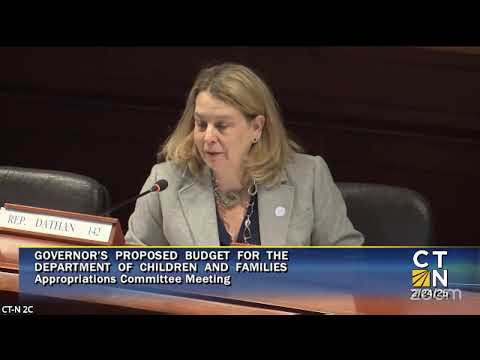
Children and Families agency says juvenile review board rollout delayed, outlines IT upgrade and staffing pressures
Summary
Department of Children and Families testified that implementation of statewide juvenile review boards will be phased in after a landscape analysis, and described progress toward replacing a legacy case‑management system with a cloud‑based platform called CTKind. DCF leaders said staffing shortages, overtime and high worker safety risks remain
Jody Holili, commissioner of the Department of Children and Families, told Appropriations members that planned statewide expansion of juvenile review boards (JRBs) will be delayed so the department can finish a comprehensive landscape analysis and finalize recommendations before full implementation.
“You're spot on,” Holili said when legislators asked whether the implementation schedule had shifted; she said the department expects partial funding in fiscal year 2026 and fuller funding and rollout in fiscal year 2027. She added that the department had been careful to finalize recommendations so the program is designed to meet local needs.
Holili also described DCF’s long‑running effort to replace the agency’s legacy case‑management system, LINC, with a cloud‑based platform called CTKind. She said the new system is intended to make reporting, data extraction and performance measurement easier for social workers. Holili noted that DCF maintains an internal business‑systems unit and that some technical staff are being centralized through the state’s enterprise IT office; she said agency staff continue to work with centralized IT to preserve access to case data and operational control.
Lawmakers pressed Holili on workforce and overtime. DCF said its authorized headcount is 2,974 positions, with a reported paid/filled count discussed at the hearing; the department acknowledged vacancies in some hospitals and social‑work slots and said overtime pressures are highest where acuity is greatest. Holili and staff acknowledged staff safety concerns and said the agency documents incidents and reports them internally; committee members asked for further information on incident reporting, overtime by job classification, nursing staffing and foster‑care census trends.
On placements, Holili said DCF has shifted some funding from board‑and‑care placements into prevention and community‑based supports to keep children safely with families where possible. She said the department will provide the subcommittee with more detailed lists and trends for placements, staffing, overtime and ARPA‑funded programs.
Ending
DCF committed to supplying the committee with staffing and overtime detail by job classification, foster‑care and placement census trends, documentation of staff incident reporting and plans for CTKind implementation and juvenile review board rollout timelines.