Get Full Government Meeting Transcripts, Videos, & Alerts Forever!
Get email alerts on the Historic Preservation topic
No spam. Unsubscribe anytime.
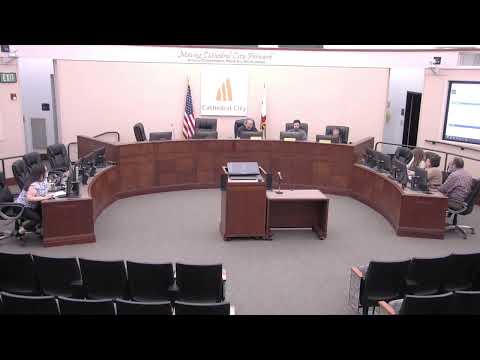
Cathedral City historic preservation committee outlines 2025 work plan, agrees staff will compile proposals
Summary
At a meeting of the Cathedral City Historic Preservation Committee, members introduced a new appointee, reviewed 2024 activity, and directed staff to compile a draft 2025 work plan that will include an informal recognition pathway, outreach, and edits to the application process.
The Cathedral City Historic Preservation Committee met with a quorum present and approved the meeting minutes before moving into a discussion of a work plan for 2025 focused on clarifying nomination criteria, public outreach and an alternative, informal recognition pathway for historic resources.
Chair Rivera opened the meeting and noted a quorum. A motion to approve the minutes was made by Committee member Ery Knox and seconded by Committee member Dr. Hunter Copper; the committee approved the motion. New member Cynthia was introduced to the committee during the meeting.
The committee reviewed its 2024 work, noting it held four meetings last year and completed a revision of the historic preservation certificate of appropriateness application. Staff identified continuing priorities left from 2024, including potential revisions to the historic preservation ordinance, compiling professional resources to assist applicants and revisiting earlier survey work. Staff referenced the 2017 Kaplan Chen Kaplan cultural resources report as a key background document for the committee’s work.
During introductions, Dr. Hunter Copper described his background: "I was the lead archaeologist for the Bureau of Land Management in California," and said he wants the committee to revisit some prior work he believes was left incomplete. Committee member Ery Knox said she approaches preservation "as a storyteller" and is working with the owner of the Agnes Pelton cottage toward establishing a full-time museum there. The committee noted that the Agnes Pelton House is currently the city’s only designated landmark.
Staff member Schultz presented a proposed work-plan template (using Palo Alto’s concise example as a model) and walked committee members through how goals, timelines, resource needs and measures of success could be organized. Schultz said the work plan would help the committee prioritize among many possible tasks, identify funding or consultant needs and provide documentation to support any future budget requests.
Committee members and staff discussed several specific near-term tasks for the work plan: (1) streamline and finalize the application form and create a pre-application review process to help potential applicants; (2) assemble a short list of 5–10 candidate properties or resources (drawn from existing reports, staff surveys and committee field work) to focus initial outreach and research; (3) develop public-facing materials that explain what it means for a property to be historic and how the process works; and (4) create an "alternate pathway" for recognition that would allow non-designated but locally significant resources to receive acknowledgement (plaque or similar) without full landmark designation or tax incentives.
On the question of branding and outreach, members debated local usage of the nickname "Cat City." One committee member cautioned that the term's origins are pejorative for some long-time residents; another said the nickname is common in local usage and that interpreting the nickname could be part of public history work. The assistant city manager and staff encouraged approaching that conversation with community outreach in mind.
Staff and the committee agreed on a direction (not a formal ordinance change): staff will compile the committee’s ideas and examples into a draft work plan and present that draft at the next meeting for committee review and refinement. Chair Rivera framed that assignment as "your opportunity to write the future of this committee," and staff indicated the draft will include suggested timelines and rough resource estimates.
Formal votes recorded at the meeting were limited. The committee approved the motion to adopt the meeting minutes; mover: Ery Knox; second: Dr. Hunter Copper; vote tally: not specified in the transcript. No ordinance changes or formal landmark designations were considered or adopted at this meeting.
The committee agreed to add future agenda items, including a discussion about the city's 100th-anniversary commemoration (1925 was cited as the year the first tract map and earliest usage of the name Cathedral City were recorded) and further work-plan development. Staff and committee members also discussed potential uses of the Mills Act tax abatement program for future designated properties; staff described Mills Act exploration as an item that had been discussed in 2024 but not advanced.
The meeting closed after committee member comments and direction to staff. Staff said it would circulate a revised work-plan draft and resource list prior to the next meeting so members could bring additional suggestions. The meeting adjourned at 6:23 p.m.