Get Full Government Meeting Transcripts, Videos, & Alerts Forever!
Get email alerts on the Athletic Trainer Scope Change topic
No spam. Unsubscribe anytime.
Subcommittee approves change to athletic-trainer statute after contested hearing
Summary
The Occupational Therapy and Professional Licensing Subcommittee voted 4-3 to advance House Bill 314 (Sub LC461091S), a measure that would replace the statutory word “injury” with “condition” in the athletic-trainer statute.
The Occupational Therapy and Professional Licensing Subcommittee voted 4-3 to advance House Bill 314 (Sub LC461091S), a measure that would strike the statutory word “injury” and replace it with “condition” in the definition of services athletic trainers may provide.
Sponsor Chairman LaHood said the change is intended to remove ambiguity about whether athletic trainers may treat conditions that develop away from an athletic field, giving a physician the option to delegate treatment when the clinical issue is related to physical activity regardless of where it occurred.
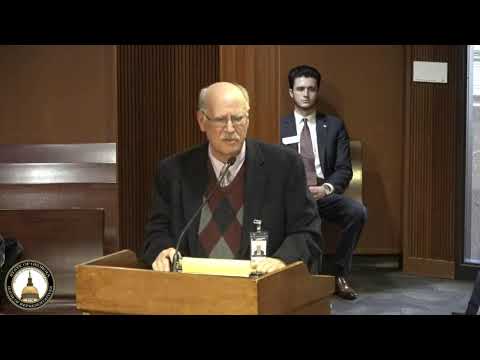
“...it changes the word. It strikes the word injury and replaces it with condition,” LaHood said while introducing the bill. Paul Higgs, a licensed athletic trainer who testified for the Georgia Athletic Trainers Association, told the committee the language comes from the Georgia Board of Athletic Trainers and “we support this bill because it’s based on wording recommended and and requested by the Georgia Board of Athletic Trainers.”
Supporters said the change would not expand athletic trainers’ education or scope beyond what is taught in accredited programs; it would clarify that a sprain or an overuse condition related to physical activity could be treated whether it occurred on the field or elsewhere. LaHood and Higgs also told the committee that athletic trainers hold graduate-level credentials and that physician oversight and delegation remain the gatekeeping mechanism: graduating from an accredited program, passing the Board of Certification exam and maintaining licensure were cited as existing limits on practice.
Opponents—representatives of the American Physical Therapy Association of Georgia, occupational therapists, and the Georgia Chiropractic Association—urged caution, saying the proposed change could broaden practice beyond athletic care into areas requiring additional training. Kathleen Geist, immediate past president of APTA Georgia and a doctor of physical therapy, testified: “Our legislative committee believes the change of wording would drastically change what athletic trainers can do under their current practice and educational model.” Occupational therapist Tom Bauer said the record lacked redacted examples of specific problems the bill was intended to fix; Aubrey Valiance, general counsel for the Georgia Chiropractic Association, called the change “a huge expansion,” and warned it could allow treatment of conditions arising from car accidents, slip-and-fall incidents or other non-sport activities.
Committee members pressed supporters on practical limits. Members asked whether athletic trainers could clear an athlete to return after a concussion; Higgs said trainers may be delegated that authority under physician oversight and that prior legislation allows athletic trainers to clear return-to-play under such delegations. LaHood and Higgs said the statute currently permits athletic trainers to treat conditions related to physical activity regardless of setting and that the bill would make that intent clearer.
Committee discussion also addressed educational requirements. Higgs and LaHood said accredited programs are at the master’s level and that credentialing requires passing a national certification exam and state licensure; Higgs said athletic trainers “are not required to have a physician’s referral to practice” in Georgia under current provisions and that provisional practice arrangements exist.
After public testimony and member questions, Representative Ridley moved to recommend the bill “do pass at proper time.” The motion received a second and passed on a recorded show of hands, 4 in favor and 3 opposed. The bill now goes to the full committee for further consideration.
No amendments were adopted during the subcommittee hearing. Several professional associations indicated willingness to negotiate language; committee members asked for clarified lists or limits if the bill were to move forward.