Get Full Government Meeting Transcripts, Videos, & Alerts Forever!
Get email alerts on the Code Enforcement Safety topic
No spam. Unsubscribe anytime.
Oakdale adopts code-enforcement safety standards to comply with Senate Bill 296
Summary
Council approved a code enforcement officer safety standards policy that implements risk assessments and field protections including pepper spray, radio communications and protective kits; staff said radio equipment may add about $3,000 in costs.
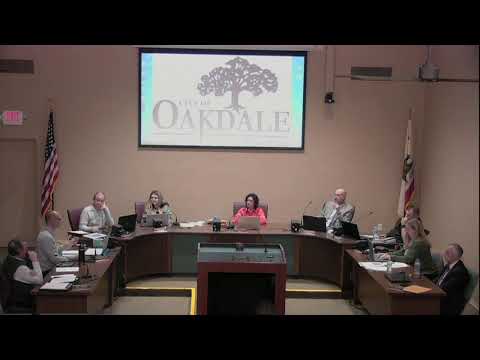
The Oakdale City Council on Feb. 18 adopted a code enforcement officer safety standards policy designed to comply with Senate Bill 296, which requires jurisdictions that employ code enforcement officers to assess threats and adopt protective standards.
Staff framed the policy as a tailored program addressing local risks for code enforcement officers, including encounters with hazardous properties, hoarding situations and potentially hostile individuals. The policy calls for a risk evaluation and the adoption of measures such as issuance of pepper spray (with required training and certification), improved radio communications with the police department and a protective equipment kit (coveralls, masks and shoe covers) for field responses.
"There was a senate bill that was enacted. It's, senate bill 296. And senate bill 296, what it does is it requires each and every local jurisdiction that employs code enforcement officers to do 2 things," a staff presenter said, summarizing the statutory requirement and the city's response. Staff noted that code enforcement officers are not peace officers but that reasonable protections are necessary.
Code enforcement officer Diana Guerrero Garcia addressed council and described field conditions she has faced, including hoarding homes, mold, animal and human waste, and a meth-lab case that required multiagency hazardous-materials response. She said a field kit and protective coveralls are essential for safety and to avoid contaminating staff footwear and vehicles.
Council members asked about fiscal impacts. Staff said many items are minimal-cost (pepper spray, online certification course ~ $40; pepper spray ~$30) and that certain protective items are available from other city inventories. However, staff and council acknowledged a radio provided by the police department could incur an incremental cost; staff estimated an additional radio at about $3,000. The council approved the policy on a unanimous vote.