Get Full Government Meeting Transcripts, Videos, & Alerts Forever!
Get email alerts on the Driver's Licenses Immigration topic
No spam. Unsubscribe anytime.
Senate committee advances bill to reject out‑of‑state driver’s licenses issued to unauthorized immigrants
Summary
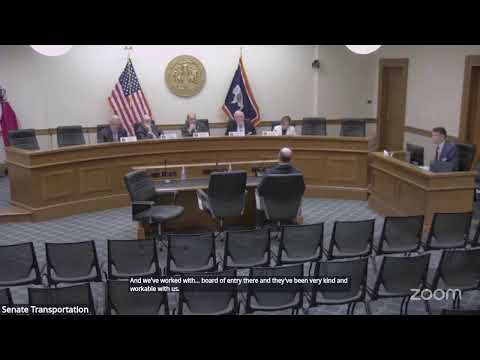
The Senate Transportation, Highways & Military Affairs Committee voted 4–1 to advance House Bill 116, which would declare driver’s licenses issued by other jurisdictions to unauthorized immigrants invalid in Wyoming. Supporters said the change preserves license integrity; opponents raised road‑safety, profiling and interstate‑compact concerns.
House Bill 116, which would declare driver’s licenses issued by other jurisdictions to unauthorized immigrants invalid in Wyoming, moved forward from the Senate Transportation, Highways & Military Affairs Committee by a 4–1 roll‑call vote.
Representative Votman, the bill’s sponsor in committee, told senators the measure “would specify in Wyoming law as a clear policy statement that driver's licenses issued by other states to unauthorized immigrants are invalid in Wyoming.” The bill creates a new statutory section that defines “unauthorized alien” as a person “who is not a U.S. citizen and not lawfully admitted to the United States,” and directs the Wyoming Department of Transportation to adopt rules to implement the change.
The bill’s sponsor and several committee members said the measure aims to protect the integrity of state driver’s licenses, which are used for identification and election purposes. Representative Hoffman noted the bill includes exemptions for government employees, active‑duty military and full‑time students.
Department and enforcement testimony offered practical context. Misty Zimmerman, program manager for Wyoming Driver Services, said, “Wyoming would not issue this type of credential. We would require proof of identity, proof of legal status, and proof of Wyoming residency in order to issue these driver's licenses.” She testified that not all other states mark licenses issued to people without lawful presence, making such credentials hard to detect at a glance.
Casey Ramsey of the Wyoming Highway Patrol described existing enforcement practice: “Normally we'd run those checks. We'd ask if they have a passport. We could do that, but we can run them through our dispatch to check and see what their status is here in the United States as well.” Committee senators pressed on how officers would distinguish international driver credentials and what effect the bill might have on Wyoming’s participation in the driver’s license compact.
In public comment, Kathy Russell, representing the Wyoming Republican Party, said the party supported the bill to protect election integrity and highway safety. In contrast, Antonio Serrano, advocacy director for ACLU Wyoming, opposed the measure. Serrano argued the bill “does not make our roads safer” and cited examples from other states saying expanded access to driving privileges for undocumented residents improved road safety because more drivers were tested and insured. He also warned the bill could lead to profiling and recounted a personal incident he said illustrated the risk.
Senators discussed potential legal and practical consequences. Committee members asked whether Wyoming’s action would conflict with the driver’s license compact or the U.S. Constitution’s Full Faith and Credit provisions; witnesses said the compact and national standards do not specifically address the situation and the long‑term effects were unclear. Senator Cooper said he would vote no “for the same reason” — uncertainty about the compact — while other senators said they would support the bill as written.
A motion to advance the bill was moved and seconded in committee; the roll call recorded Senators Anderson, Brennan, Kohl and Chairman Pappas voting aye and Senator Cooper voting no. The committee report recorded that Senator Kohl will carry the bill to the Senate floor.
What’s next: HB116 was reported from committee and will be scheduled for floor consideration; the department would be responsible for rulemaking if the bill becomes law.