Get Full Government Meeting Transcripts, Videos, & Alerts Forever!
Get email alerts on the Tax Policy topic
No spam. Unsubscribe anytime.
Senate Revenue Committee unanimously approves bill clarifying distribution of ad valorem penalty revenue
Summary
The Senate Revenue Committee on a 5-0 vote approved House Bill 38 to conform statutory language so penalties tied to ad valorem tax enforcement are handled under Wyoming statute 8-11-109 and credited to county public school funds via the state treasurer.
The Senate Revenue Committee voted 5-0 to pass House Bill 38, a conforming-change measure clarifying where penalties collected for ad valorem tax violations are credited.
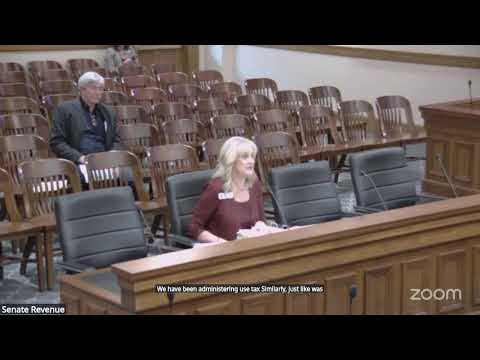
Brenda Henson, director of the Wyoming Department of Revenue, told the committee the change aligns statute wording with Wyoming Statute 8-11-109 so civil and administrative fines and penalties collected under state law are paid to the state treasurer and credited to the county public school fund where the violation occurred. Henson said the bill specifically updates language that had been referring to the “school foundation program account” to instead follow the distribution required by 8-11-109.
The bill applies to penalties tied to ad valorem taxation, including late-filing penalties for entities such as rail or other public-utility property taxpayers when ad valorem values are established. Henson described the measure as technical and conforming: "This bill simply ensures the penalty for ad valorem taxation is credited to the county public school fund as required by statute," she said.
There were no requests for public comment. The committee recorded a roll-call vote on HB38; Senator Case moved the measure and Senator Pappas seconded. The five members present—Senators Case, French, Eyde, Pappas and the committee chair—voted aye. The bill passed the committee on a 5-0 vote.
Committee members did not request amendments; Henson said the Department of Revenue had already been administering penalties consistent with the statute and that the bill cleans the statutory language to reflect that practice. The committee closed public comment and advanced the bill to the next step in the legislative process.