Get Full Government Meeting Transcripts, Videos, & Alerts Forever!
Get email alerts on the Infrastructure topic
No spam. Unsubscribe anytime.
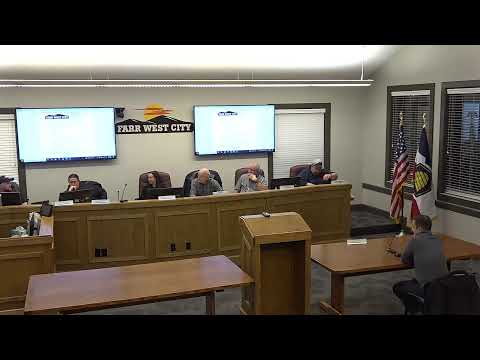
Commission recommends preliminary approval for Legends mixed‑use subdivision, flags stormwater and traffic issues
Summary
Farr West Planning Commission recommended preliminary approval of the Legends Mixed‑Use Subdivision subject to conditions after lengthy discussion about stormwater feasibility, irrigation piping, emergency access, roadway widths and traffic calming measures.
The Farr West Planning Commission voted to recommend that the City Council grant preliminary approval for the Legends Mixed‑Use Subdivision, while identifying a set of technical issues that must be resolved before final‑phase approvals.
Why it matters: The preliminary approval advances a large mixed‑use project that includes commercial lots, townhome units and single‑family areas. Commissioners required further engineering details for stormwater, irrigation infrastructure, emergency access, road design and traffic calming before recording final plats and issuing construction approvals for phased parcels.
Commission action: Commissioner Lyle moved and Commissioner Jason seconded a motion recommending preliminary approval of the Legends Mixed‑Use Subdivision. The motion carried with 1 recorded opposing vote by Commissioner Darren; the commission directed staff and the applicant to address outstanding engineering and platting items before final approvals.
Stormwater and ponds: City staff and the project geotechnical report indicated groundwater was encountered “as shallow as 2 and a half feet down.” The city engineer warned that shallow groundwater makes infiltration‑based low‑impact development measures infeasible at the site. The engineer explained that, "if your groundwater... is found as shallow as 2 and a half feet down... infiltration appears to be not very feasible." Commissioners expressed concern that detention basins could become permanent retention ponds if bottoms are not kept above groundwater; staff said final designs will need elevations to ensure ponds remain drained in normal conditions and not create standing water in backyards.
Irrigation and ditches: The applicant proposes to realign and pipe an irrigation turn‑off through the site. Staff said the project will show a 20‑foot irrigation easement for the piped segment and must obtain approval from ditch users before final approval. Michael (Visionary Homes) stated the proposed ponds and outfalls will be above the adjacent irrigation ditches and that low flows will continue to discharge west until storm peaks require detention storage.
Access and stub roads: The city engineer raised the question of whether stub roads should be provided to an adjacent, narrower parcel to the south to avoid future land‑locking of that property. The applicant said the narrowness of the adjacent parcel (about 230 feet) and its existing access on 2000 West make a southern stub road impractical; commissioners asked staff to confirm ordinance requirements and whether a stub would be required or a shared access easement would suffice. Staff noted the project will likely be built in phases and that final plats must show required turnarounds, including hammerheads or temporary turnarounds where fire standards require a turnaround for dead‑end runs over 50 feet.
Roadway width and traffic calming: Commissioners discussed the collector‑road cross section. Staff described typical standards (66‑foot right‑of‑way for a collector with 42 feet of asphalt; other projects have used 70‑foot right‑of‑way and 45‑foot asphalt). Commissioners debated traffic calming options — roundabouts, raised speed tables and bulb‑outs — and public works cautioned about plowing, emergency‑vehicle impacts and MUTCD/AASHTO guidance. The commission directed the applicant to provide a traffic engineer’s analysis for future (connected) conditions and recommended that staff and the applicant evaluate traffic‑calming measures and the design of the collector before final approval.
Trail, ownership and maintenance: The landscape plan shows a trail along the canal; staff said the city will maintain that trail. The commission asked the applicant to clarify whether the trail parcel is dedicated to the city or maintained via an easement and to include the ownership/maintenance language on the final plat and in the development agreement.
Phasing and final approvals: Staff emphasized that this is a preliminary approval and that final approvals will be submitted and reviewed in phases. Staff and the applicant agreed that unresolved site engineering items (pond elevations, irrigation approvals, fire turnarounds, ROW and traffic‑calming details and final open‑space calculations) would be addressed during final engineering submissions for each phase.
Next steps: The planning commission’s recommendation and the engineer’s updated memo will be forwarded to the City Council. The commission directed staff to require the technical updates described above as conditions of final approval and to require the applicant secure ditch‑user approvals and demonstrate pond elevations above groundwater in the final submittals.
Provenance: The commission discussed the item in the meeting’s primary business session; the engineer’s memo and the applicant’s presentation supplied the technical basis for the discussion and conditions.