Get Full Government Meeting Transcripts, Videos, & Alerts Forever!
Get email alerts on the Child Fatality Review topic
No spam. Unsubscribe anytime.
Georgia Child Fatality Review panel outlines data gaps, timeline and legislative fixes as prevention priority
Summary
The state Child Fatality Review (CFR) panel briefed the Judiciary — Juvenile committee on its role, findings on causes of child deaths, compliance challenges among local review teams and requested legislative updates to ease statutory timelines and create enforcement and prevention funding.
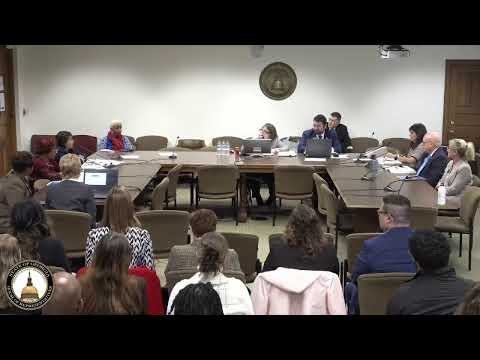
The Child Fatality Review Panel on Thursday told members of the Judiciary — Juvenile committee that the panel’s primary purpose is to understand how children die in Georgia and to recommend prevention strategies to reduce future deaths.
Panel vice chair Carolyn Altman, a juvenile court judge in Paulding County, said the review process is multidisciplinary and “very heavily informed by law enforcement and DFACS,” and explained the panel’s two goals: to track causes and circumstances of child deaths and to promote systemic prevention efforts.
The panel described a multi-tiered review process that begins at local committees and aggregates to a state panel that includes agency heads and other officials. Local committees are intended to operate in each of Georgia’s 159 counties, Altman said; local panels complete comprehensive reports that the Georgia Bureau of Investigation (GBI) staff review and elevate to the state panel for prevention recommendations.
GBI Assistant Director Scott Dutton said the GBI has administered the CFR program since a 2012 statutory requirement and that the CFR work sits in the GBI’s Division of Forensic Sciences alongside the medical examiner program. He noted the state has funded dedicated CFR staff and two pediatric medical examiners who review pediatric deaths, and described the CFR team as a help desk for local committees that provides training and quality control.
Nicole McDougall, interim safety director with DFACS, reviewed trends the panel identifies in its annual report: infant sleep-related deaths (often recorded as sudden unexplained infant death or SUID), and among ages 1–17 the leading causes listed on death certificates were motor-vehicle collisions, homicide, suicide and drowning. McDougall said the panel also tracks a steep rise in homicides beginning in early 2019 through 2022 and that the CFR team maintains more granular counts — for example, gun-related deaths and drowning subtypes — that can be provided on request.
Panel staff walked committee members through statutory timelines they must meet: notification of a reviewable death to the local committee within 48 hours and an expedited local review process intended to occur within roughly a month. Presenters said the statute also includes a reporting deadline (they referenced a 67-day timeframe) that is frequently impractical because autopsy results and other investigative information are often delayed. The panel said there is no statutory enforcement mechanism when counties fail to submit required reports; the GBI staff can request reports but cannot impose sanctions.
The panel presented prevention recommendations already emerging from local reviews, including continued promotion of infant safe-sleep campaigns, wider access to life jackets at lakes, AED placement in schools and support for evidence-based injury-prevention laws such as Joshua’s Law.
Panel leaders said they are preparing a legislative package to update the CFR statute (created in 1991 and last revised in 2014), and stressed three priorities for that update: lengthening or better aligning statutory deadlines with investigative realities, adding meaningful compliance or enforcement tools, and creating a dedicated funding source for prevention activities and epidemiologic analysis. They identified John Carter, the project epidemiologist, as essential to producing the annual epidemiologic report and noted the program needs a funded, long-term epidemiologist position.
House members on the Judiciary — Juvenile committee asked for more detailed regional and cause-specific data, especially on the homicide rise, and the panel agreed to provide additional breakdowns and to accept follow-up questions through the committee chair. The panel also noted a current House vacancy on the Child Fatality Review Board and encouraged interested legislators to apply to the Speaker’s office for appointment.
The committee did not take action; presenters said they will return next year with a formal legislative request once the panel finalizes proposed statutory language.