Get Full Government Meeting Transcripts, Videos, & Alerts Forever!
Get email alerts on the Property Crime Squatting topic
No spam. Unsubscribe anytime.
Committee backs criminalization of residential squatting, narrows property‑damage language
Summary
The House Judiciary Committee voted to report Senate File 6 after testimony that squatters were damaging residential properties and that criminal remedies could help owners and realtors remove occupants more quickly.
The House Judiciary Committee voted to report Senate File 6 to the floor after considering testimony from law enforcement, realtors, rural advocates and property owners on a bill that would make unlawful occupation of residential dwellings a crime and provide a quicker law‑enforcement remedy for owners.
Senator Anderson, the sponsor, told the committee the bill grew from constituent reports of squatters occupying residential properties and causing damage. He said many property owners now face civil eviction timelines and limited ability to secure a prompt law‑enforcement response: "So this just makes it a criminal offense. So if you have a squatter, you can call the sheriff or the city police and they will come and help kick them out," he said.
Witnesses supporting the bill described widespread problems. Laurie Ritter Cai of the Wyoming Realtors said agents had encountered occupied properties that appeared vacant and called the issue a safety risk for realtors showing properties. "We are very supportive of this bill," she said, recounting a Park County incident where a foreclosed home was secretly occupied. Brett Moline of the Wyoming Farm Bureau said seasonal or remote dwellings and cabins are vulnerable and urged support; Joey Corente of Rural Wyoming Matters asked lawmakers to consider agricultural and bare‑land scenarios in future work and emphasized rural enforcement and restitution issues.
Law enforcement representatives urged targeted drafting. Alan Thompson, executive director of the Wyoming Chiefs and Sheriffs Association, recommended narrowing a newly added property‑damage provision so it applied only when someone "unlawfully detains or occupies" a residential dwelling and causes damage, rather than applying broadly to all trespass damage. Committee members adopted a related amendment: on page 11 the committee inserted "or occupies" and deleted the phrase "or trespasses," refining the felony/damage trigger to focus on unlawful detention or occupation.
Committee discussion also addressed how the bill interacts with existing landlord‑tenant law and how to treat prior tenants who later occupy a property. Witnesses and members agreed holdover tenants or prior tenants who assert a right to remain should continue to use the civil forcible entry and detainer process. Several speakers urged the committee to clarify whether the bill should extend to commercial or agricultural property; sponsors said that expansion could be debated in future sessions.
The bill includes a provision amending the property destruction statute to make knowingly defacing, injuring or destroying property in a residential dwelling a felony punishable by up to 10 years in prison, a fine of up to $10,000, or both, if done by a person unlawfully detaining or occupying a residential dwelling. Witnesses noted courts already treat damage above certain dollar thresholds as felonies and suggested the committee consider how to limit exposure for minor incidental damage.
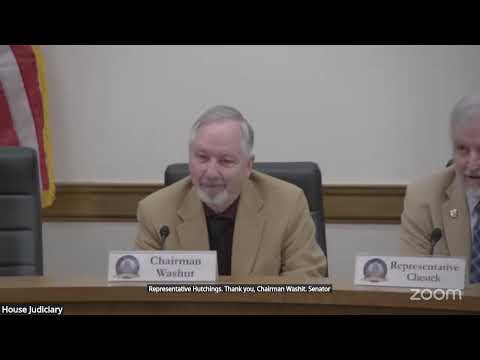
After the amendment to delete the trespass language, the committee voted to report the bill. The recorded roll call showed the measure carried by voice and the clerk recorded nine ayes. Representative Feiler volunteered to carry the bill on the floor.
Committee members and witnesses said they will continue work on definitional issues — including refining "contracting" and "permit" language discussed on a different bill earlier in the hearing — and on whether and how to expand protections to agricultural and commercial properties. For now, the committee moved Senate File 6 forward with the amended damage language focused on unlawful detention or occupation.
Votes at a glance
- Senate File 6 — advanced out of House Judiciary Committee (recorded as 9 ayes).