Get Full Government Meeting Transcripts, Videos, & Alerts Forever!
Get email alerts on the Municipal Finance topic
No spam. Unsubscribe anytime.
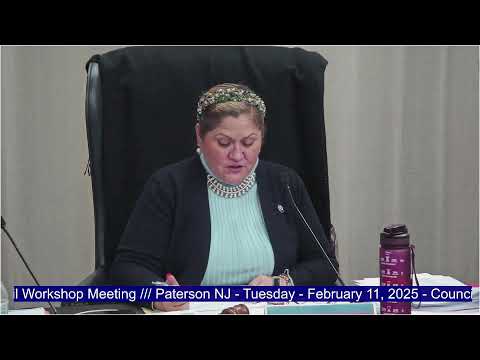
Council approves $44.46 million in bills after heated debate over police retro pay and board professional payments
Summary
Paterson council adopted payment of bills totaling $44,459,540.46 after members pressed administration for clearer accounting on police retroactive pay, escrowed funds for planning/board professionals, and health‑benefit payments.
The Paterson Municipal Council voted to approve payment of bills totaling $44,459,540.46 on Feb. 11 after an extended exchange between council members and municipal finance staff about where public dollars have gone and whether vendors and board professionals had been paid.
Councilwoman Ruth Mims moved approval of the bills; the motion carried by roll call. The clerk announced the final tally as five in favor, one opposed and three absent; the motion to adopt the payment of bills passed. Council members who spoke on the record included Councilwoman Mims (yes), Councilman Luis Velez (yes), Councilman Joseph Oden (yes) and Councilman Jackson (no). Finance staff responded to questions during the workshop session.
Council members pressed the CFO and other staff to confirm whether professionals who serve the Zoning Board, Planning Board and Board of Adjustment had been paid. Councilman Velez said board meetings had stalled because professionals reportedly were “not getting paid,” slowing development applications. The CFO said some payments to professionals were made last week and named specific firms he believed had been paid, but council members demanded written confirmation routed to the council.
Councilman Jackson pressed for transparency in an escrow account created under a 2018 ordinance that was intended to hold developer fees so that board professionals would be paid when hearings were scheduled. Jackson said he had repeatedly requested the escrow account ledger “to identify how much money is in the escrow account, how much money has been utilized, and what is there” to prevent further meeting delays. The CFO said Economic Development holds project files and that staff would follow up; Mims asked the acting BA to ensure the information is sent to council members.
Members also debated classification of “statutory expenditures” on the bills list and whether line items (solid waste, utilities) should be presented with clearer detail. The CFO explained statutory expenditures include solid‑waste and utility line items and noted there is typically a two‑month lag for some benefit payments.
A separate thread of the discussion focused on contract payouts for the police department. Council members said officers had received partial retroactive pay and that the administration and the police union had different calculations; the CFO said he believed his numbers were correct but that the union and its attorney disputed them and discussions were ongoing. Councilwoman Mims said she wanted “full disclosure” to the council — a comparison of the administration’s and the union’s retro figures — so the council could understand any variance and avoid service disruptions.
Council members also asked for a written breakdown of certain high‑value line items on the bills list, including health‑benefit payments and department allocations. The CFO said health benefits are paid monthly (with a purported two‑month lag), and that he would provide requested documentation to council members.
The council emphasized that questions about payment details and escrow balances should be resolved quickly so that Zoning and Planning boards can resume regular business. Council members directed staff to circulate requested reports and to follow up with Economic Development and the board secretaries about scheduling and vendor payments.
The payment of bills was approved in the meeting’s formal roll call and is reflected in the official minutes as adopted by the municipal council.