Get Full Government Meeting Transcripts, Videos, & Alerts Forever!
Get email alerts on the Human Trafficking Hotline topic
No spam. Unsubscribe anytime.
State advocacy groups and CJCC urge funding to stabilize Georgia's human-trafficking hotline
Summary
Officials and advocates told the appropriations subcommittee the statewide human-trafficking hotline has reliability and reporting gaps and asked for recurring funds to staff and operate a 24/7 response and victim advocacy capacity.
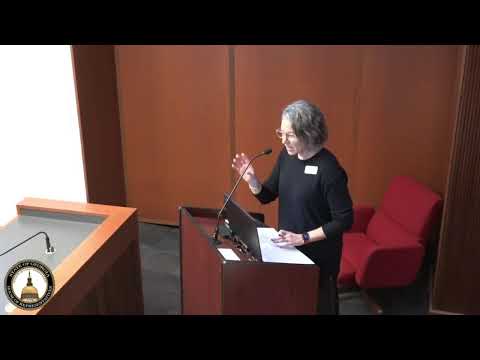
Members of the House appropriations subcommittee on public safety heard detailed testimony on a request to bring Georgia's human-trafficking hotline and victim advocacy functions under more consistent state control.
The request, presented during the Department of Public Safety and Criminal Justice Coordinating Council (CJCC) budget reviews, would add full-time state staff to answer and triage hotline calls and fund weekend contractor coverage so the hotline is staffed 24 hours a day, seven days a week.
Advocates and agency officials said repeated problems with outsourced hotline contractors, gaps in mandatory reporting, and shrinking federal grant dollars have left victims without a reliable front-line response. A CJCC speaker said the Child Advocacy Centers of Georgia had at times failed to report required incidents to the Division of Family and Children Services and had conducted interviews of minors without notifying DFCS.
"We started recognizing some significant issues with frontline response," the CJCC representative told the committee, saying their office began answering adult calls in August after repeated unresponsiveness from a contractor. The CJCC also described giving a one-time $3,000 supplement to an employee, Lindsey Cheatham, for shouldering 24/7 responsibility while the office covered the gap.
The CJCC asked for funding to hire two full-time employees who would be cross-trained to provide victim advocacy and to staff the hotline Monday morning through Friday evening. Contractors would cover calls Friday night through Monday morning to ensure continuous coverage.
Why it matters: Witnesses told the committee that bringing the hotline in-house would improve timely triage of victims, ensure mandatory reporting compliance, and coordinate placements into receiving centers and other services. The CJCC and Department of Human Services said the change would also reduce the risk that victims are told to seek help out of state because local providers appear unavailable.
Committee members pressed on whether the hotline could be reliably contracted out and were told the CJCC and DHS have concluded the risk to victims is too large without internal staffing. "We both believe that these victims are too important for us to risk yet another failed opportunity for the victims in the state of Georgia," the CJCC speaker said.
Funding context: Several speakers emphasized the loss or reduction of federal grant sources (VOCA, ARPA) that previously funded hotline and victim-service work. The CJCC requested the committee restore and sustain resources it said were lost or about to expire.
Ending: Committee members said they understood the seriousness of the problems and that the issue would be discussed in conference, but did not commit to a specific appropriation during the hearing.