Get Full Government Meeting Transcripts, Videos, & Alerts Forever!
Get email alerts on the Trade Connecticut Puerto Rico topic
No spam. Unsubscribe anytime.
Lawmakers and business leaders pitch Connecticut–Puerto Rico trade commission bill
Summary
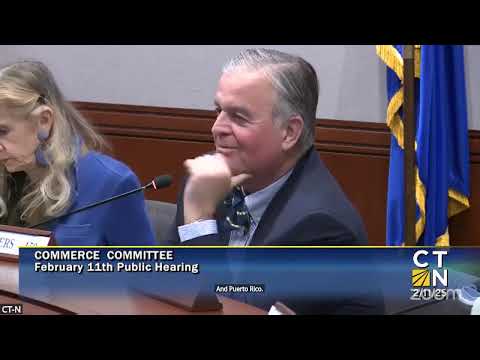
Lawmakers and business and university representatives urged the Commerce Committee to advance House Bill 5008 to establish a Connecticut–Puerto Rico Trade Commission, citing existing corporate ties, workforce exchanges and potential economic and academic collaboration.
Representative Christopher Rosario, speaking for House Bill 5,008, told the Commerce Committee he was seeking to establish a Connecticut–Puerto Rico Trade Commission to formalize and expand economic ties between the state and Puerto Rico. Representative Christopher Rosario said Connecticut is home to a sizable Puerto Rican community and to Connecticut firms with established activity on the island, and he asked the committee to consider a formal commission to promote trade and investment.
The bill’s supporters emphasized that Connecticut companies already do business in Puerto Rico and that a formal commission could coordinate trade and workforce connections. “By establishing the Connecticut and Puerto Rico Trade Commission, we can formalize existing connections, enhance trade investments, and innovation,” Representative Christopher Rosario said. He cited WWE and other Connecticut firms as examples of commercial links.
Representative Juan Candelaria, Representative Antonio Reyes and others described educational and workforce opportunities that a trade commission could help expand. Representative Juan Candelaria described university exchanges and said the University of Connecticut already runs Puerto Rican studies and academic collaborations; Representative Antonio Reyes emphasized workforce shortages in fields such as civil engineering and suggested Puerto Rico could be part of recruitment and training solutions used previously for teachers and other public employees.
Business and nonprofit leaders told the committee the commission could help match Connecticut companies and clean energy and manufacturing projects with counterparts on the island. Brian Garcia, president and CEO of the Connecticut Green Bank, testified that Connecticut and Puerto Rico have “clean energy, climate change and finance related opportunities to realize together,” pointing to prior legislative actions that increased solar and storage deployment in Connecticut. Charles Benavides Santiago of the University of Connecticut’s Puerto Rican Studies Initiative said the state’s historical and demographic ties to Puerto Rico, along with existing corporate relationships, argue for a formal mechanism to strengthen commercial and academic exchanges.
Committee co-chairs and members asked sponsors to supply model language and to work with the Office of Legislative Counsel on the commission’s composition and duties. Committee members noted similar commissions in other states and suggested the bill should define how state legislative representatives, executive liaisons and tribal or sovereign partners might participate.
The hearing produced no formal vote. Sponsors and witnesses asked the committee to continue drafting work and to consult economic-development and higher-education partners on specific duties, metrics and cross-jurisdictional coordination.
Supporters submitted written testimony and offered to provide more detailed data on existing trade volumes and university exchanges to the committee as it considers draft language.