Get Full Government Meeting Transcripts, Videos, & Alerts Forever!
Get email alerts on the Counterterrorism topic
No spam. Unsubscribe anytime.
UN briefing says Da'esh remains resilient; urges multilateral action on repatriation, borders and technology
Summary
A UN official told the Security Council that Da'esh and affiliates remain resilient across multiple regions and outlined four priority areas—capacity building in Africa, repatriation and rehabilitation support, strengthened border security, and technology-focused countermeasures—to help member states respond.
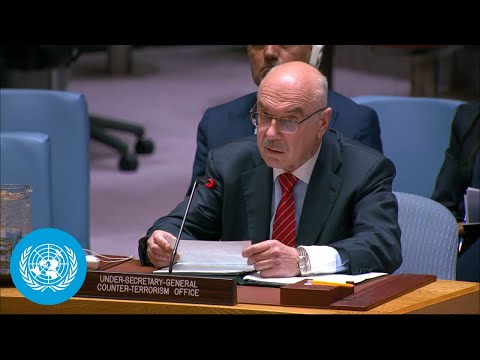
A UN official briefed the Security Council on the secretary-general’s 20th report on the threat posed by Da'esh, saying the group and its affiliates remain resilient and that “terrorism remains a significant and evolving threat to global peace and security, that no state can confront in isolation.”
The official said an estimated tens of thousands of people remain held in camps and detention facilities in northeastern Syria, and expressed concern about the risk that advanced weapons stockpiles could fall into terrorist hands. The speaker highlighted the Syrian Badia as a center for external operational planning and stressed the need for member states to facilitate safe, voluntary and dignified repatriation of their nationals from those facilities.
Why it matters: the official said the pace of repatriations declined in the reporting period and that only a small number of member states have carried out returns. The briefing linked the detention and movement of foreign terrorist fighters to regional instability in the Middle East, Afghanistan, and parts of Africa, and called for sustained international cooperation.
In the briefing, the official pointed to several regional trends. ISIL Khorasan continues to pose a threat in Afghanistan and beyond, with attempts to recruit from Central Asian states and reports of small numbers of foreign fighters traveling to Afghanistan. In Sub-Saharan Africa, Da'esh affiliates have expanded operations and territorial control, with intensified attacks in parts of West Africa and the Sahel and continued recruitment in East Africa, including in and around Somalia. The official also said the Allied Democratic Forces in the Democratic Republic of the Congo had carried out attacks that resulted in “over 300 civilian fatalities.”
The speaker set out four priority areas of UN support. First, the UN has prioritized capacity-building in Africa: the office increased technical assistance by 16% last year, ran a fusion-cell program that trained 124 analysts from 21 African member states, and provided a vulnerable-targets program to five new African beneficiaries (Benin, Côte d’Ivoire, Kenya, Mauritania and Senegal) to protect critical infrastructure and soft targets. Second, the United Nations continues to advise member states on prosecution, rehabilitation and reintegration of returnees, including support to Iraq for registration and screening at Al-Hol camp and facilitation of the repatriation of approximately 400 Iraqi children to a rehabilitation center.
Third, the official emphasized strengthening border security, citing recent multilateral efforts including the Dushanbe process and a Kuwait declaration on border security and management. The office said it partnered with Kuwait and Tajikistan to convene a high-level conference and noted an initiative that now has 63 beneficiary member states using passenger-data software to detect and prevent terrorist travel. Fourth, the UN is working with partners to address misuse of new technologies for terrorism: the office launched a City Tech Plus initiative with Interpol and the European Union and has delivered operational training on unmanned aerial systems to officials in Southeast Asia and West Africa.
The briefing also referenced victim-centered work: the office co-organized the International Conference on Victims of Terrorism, convening participants from 66 countries, and emphasized amplifying victims’ voices in efforts related to returnees and rehabilitation.
The official repeatedly called for sustained multilateral cooperation and concluded, “By working together, we can address this evolving threat and build a more secure future.”