Get Full Government Meeting Transcripts, Videos, & Alerts Forever!
Get email alerts on the Public Parks topic
No spam. Unsubscribe anytime.
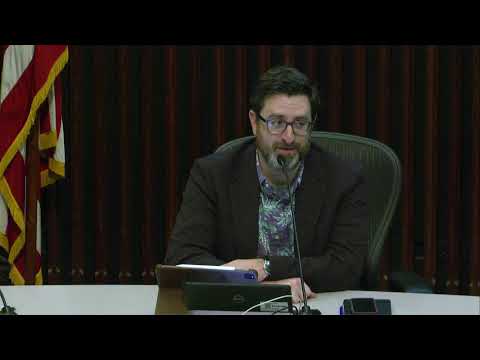
Design Review Board upholds zoning administrator, denies appeal of planned Tierra De Rosas public plaza
Summary
After hours of public comment, the Design Review Board denied an appeal and upheld the zoning administrator’s approval of a 1.01‑acre Tierra De Rosas public plaza, a decision opponents said could affect parking and local businesses.
The Santa Rosa Design Review Board voted 4–1 with one abstention on Feb. 12 to deny an appeal and uphold the zoning administrator’s approval of the Tierra De Rosas Public Plaza, a privately maintained public plaza that is part of a larger master development formerly known as Roseland Village.
The plaza design reviewed by the zoning administrator and appealed by neighbor John Paulson covers improvements the city described as totaling roughly 1.01 acres, including the plaza surface, pathways and adjacent sidewalks. Paulson, whose family helped develop the original Rosen Village shopping center, argued the approval conflicts with a recorded 1956 reciprocal access and parking easement and said removing surface parking would harm neighboring businesses and create a cloud on title. “How can anybody in their right mind think that they can build on a recorded easement?” Paulson said during his allotted presentation, also recounting disputes over a temporary food‑truck operation known locally as Matote.
City staff summarized the long project history: approvals and appeals since 2019, a previous temporary food‑park entitlement (Plaza Temporal / Matote Food Park), a planning commission record of actions and a zoning administrator action on Nov. 21, 2024 granting minor design review for the plaza. Staff said the project was not a new land‑use designation; it implements elements of an earlier approved tentative map and master plan. Staff also noted that, at entitlement stage, required technical studies and CEQA review would be applied as appropriate and referenced CEQA Guidelines sections cited in the report.
Public comment was extensive and predominantly from Roseland business owners and residents. Concerns focused on the plaza’s relationship to existing businesses along Sebastopol Road, the prior Matote operation and the potential for future food‑truck activity to displace paying customers and create traffic, trash and public‑safety issues. Local restaurateurs and small business owners said the temporary food‑park drew customers away from brick‑and‑mortar businesses and that the community had not been provided Spanish‑language notices and outreach opportunities to the degree needed.
Appellant Paulson said the original center had 272 parking spaces on the seven‑acre site and criticized the master plan’s proposed parking and street arrangements. City staff and the applicant emphasized the plaza replaces the temporary food‑truck configuration and that any future mobile food vendors or events would be subject to separate permitting or conditional use processes. Michelle Whitman of the Sonoma County Community Development Commission described the site’s long planning history and noted Roseland’s documented shortfall in parkland: “Roseland has 0.1 acres of open space per 1,000 persons,” she said, citing a U.S. EPA/Brownfields workplan summary.
Board members asked procedural and substantive questions. One board member requested clarification that the board was acting only on the design review appeal and not adjudicating the underlying legal easement dispute; staff and the board attorney’s office (unavailable during the meeting) advised that the administrative appeals process must be exhausted before any court remedies are pursued. The board framed its decision narrowly: it considered whether to uphold the zoning administrator’s design review approval. The final roll call recorded Board member Cook voting no; Board members Huang, Liptak, Weigel and Chair Jones Carter voting to deny the appeal; Vice Chair Adam Sharon recorded an abstention on the item. The board directed that the action is final from the Design Review Board level.
The decision allows the approved minor design review to stand; any future operational uses (for example, mobile vending or special events) would require separate permits and are subject to other city, county and state regulations.