Get Full Government Meeting Transcripts, Videos, & Alerts Forever!
Get email alerts on the Municipal Budget topic
No spam. Unsubscribe anytime.
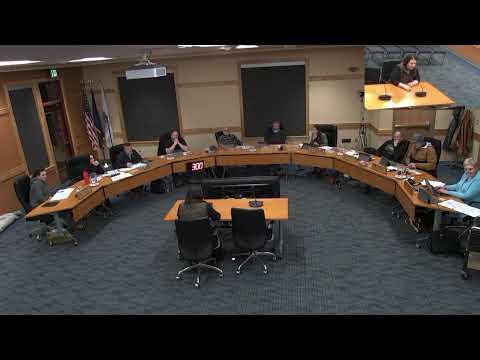
Sitka assembly reviews FY2026 enterprise fund rate proposals, discusses debt and asset repairs
Summary
City staff presented proposed FY2026 rate adjustments for utility, harbor, water, wastewater and solid waste enterprise funds and discussed debt, major capital projects and equipment purchases; assembly members asked for more detail on emergency reserves and asset management after recent failures.
City staff asked the Assembly of the City and Borough of Sitka on Feb. 4 for guidance on proposed FY2026 rate recommendations covering electric, water, wastewater, harbor and solid waste enterprise funds, and outlined major capital needs, debt decisions and equipment purchases that could affect rate payers.
In a presentation, a staff presenter identified as Melissa said the administration seeks the assembly—s guidance so staff can adjust revenue projections as they finalize the budget. "It's very ideal to get the guidance beforehand," Melissa said, noting staff had modeled operating and capital expenditures over 10 years and was recommending a three-year baseline. She described general assumptions: a 3.0–3.5% increase for operating expenses (3.5% applying to solid waste), a 5% increase for construction costs and targeted rate changes meant to preserve working capital and meet debt and covenant obligations.
Why it matters: enterprise funds pay for ongoing services used by residents and businesses; changes to rates shift costs directly to utility customers and affect the City and Borough's ability to fund long-lived infrastructure, debt service and emergency repairs.
Electric: staff proposed a 2% per-kilowatt-hour increase for FY26, continuing through FY28 in the model, and a phased increase to the base customer fee that staff said will generate "a couple hundred thousand dollars." Ron Vincent, electric utility director, described proposed equipment purchases that could reduce contractor costs, including a digger derrick (a boom truck configured and insulated for hot-line work) and a remotely operated vehicle (ROV) for underwater inspections at the dam. "This piece of equipment is essentially a boom truck that is used for ... pole replacements, hot work on the lines," Ron Vincent said, adding that the new unit would meet OSHA compliance and allow the utility to do more work in-house rather than relying on expensive contractors.
Assembly members expressed concern that the 2% increase is below recent inflation measures and could leave the utility vulnerable if multiple long-lived assets fail. "Going below inflation makes me nervous," Assembly member Christiansen said, recalling prior years when low increases contributed to future fiscal stress. Other members pointed to neighboring communities— experience: Ystad noted Haines—s transmission-line failure and Ketchikan—s previous multi-year increases.
Paying USDA loan: staff presented an option to pay off the U.S. Department of Agriculture Rural Utilities Service (USDA RUS) loan in full. According to staff, paying the RUS loan would reduce long-term debt but temporarily lower working capital by roughly $3 million in the first year. Melissa said the proposed FY26 rates "do not increase because of paying back the USDA loan," and that, if a now-announced nearly $3 million grant for the Green Lake phase 2 project materializes, it could eliminate the budgetary effects of paying that loan.
Water and wastewater: staff proposed 6% annual increases for both water and wastewater. Melissa said both funds "rely very, very heavily on debt" and face expensive mandates: water recently completed a filtration project and wastewater will need effluent disinfection upgrades required by the regulatory authority. The wastewater presentation included a contingent $7 million appropriation for a DEC loan and a note staff will seek an additional $4 million, with staff calling the wastewater funding "high in our legislative priorities."
Solid waste and harbor funds: solid waste staff proposed a 2% increase for collections and a 4% increase for transfer station and scrapyard operations, reflecting contract inflation and compactor-use efficiencies. For the harbor fund staff proposed a 4% increase; Melissa said the harbor plan leans on life-extension strategies rather than full replacements and will still likely require future debt for large projects.
Asset management and recent failures: the assembly pressed staff about asset condition and emergency readiness after a recent failure at the Granite Creek lift station. Environmental Superintendent Joe Swayne said, "Granite Creek had an electrical fire a couple months ago." Staff said many lift stations are about 40 years old though designed to last ~20 years and emphasized that better preventive maintenance and the new asset-management approach should reduce surprise failures.
Capital planning and priorities: staff said the electric fund's 10-year plan currently projects roughly $3.5 million per year in 2025 dollars in projects; the plan also shows the possible long-term benefit of paying the USDA loan. Melissa said grant funding is limited and often does not match the municipality's highest priorities, which complicates the sequencing of projects.
Next steps: staff asked the assembly for general concurrence to proceed with the proposed FY26 rate starting points and said the draft budget would be released in mid-February to give the assembly time to review. Several assembly members urged staff to consider modestly higher near-term increases to build resilience for emergencies. There were no formal votes during the session; staff recorded the assembly—s feedback as direction to include the proposed rates and resource proposals in the draft budget for further review.
Ending: staff scheduled the next budget meeting for Feb. 27 and said a complete draft budget would be circulated to the assembly on Feb. 18 for review before the next discussion session.