Get Full Government Meeting Transcripts, Videos, & Alerts Forever!
Get email alerts on the Permitting topic
No spam. Unsubscribe anytime.
San Marcos officials outline permit‑review fixes, aim to speed watershed reviews and notify applicants
Summary
City staff told the council they have added reviewers and plan software improvements to reduce backlog for permits and watershed protection plan reviews, and will create better applicant notifications when reviews exceed target timelines.
San Marcos city staff told the City Council on Jan. 31 that they have added personnel and are pursuing technology changes to shorten the time it takes to process development permits and watershed protection plan reviews.
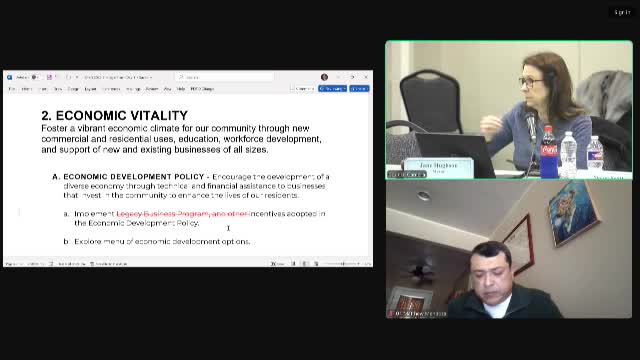
The comment came during the council’s fiscal‑year visioning workshop when members asked how the city will make permitting “easier” for applicants while retaining careful environmental review in the city’s sensitive floodplain areas. Assistant City Manager Joe Pantone said the city overhauled its economic development policy in 2022 and has recently added staff to support development review capacity; he told the council “we are literally a week or 2 away from hiring that position” for business retention and small‑business support that he said will also help coordinate permitting needs.
Why it matters: Developers and small business owners repeatedly raise permitting timelines as a barrier. Council members said applicants need clearer expectations and faster, repeatable responses when city reviews run beyond target times.
What staff described: Planning and engineering managers told the council they now do more in‑house reviews that previously were outsourced, and that they added reviewers on watershed protection plans. Staff said watershed reviews are complex and can take many hours—one staff explanation noted those reviews “take days to do” and that the queue can include dozens of reviews. Staff also described an internal review‑tracking list that flags near‑due items yellow and overdue items red, and they said they are working to integrate that tracking into the MyPermitNow online portal so applicants can see where their submittal stands.
Customer communication and escalation: Council members pressed staff on what happens when a review exceeds the stated 30‑day goal. Staff said managers review the queue, shift workloads when needed, and are exploring an external platform feature that would allow applicants to see queue position. Staff also raised the idea — not yet adopted — of permitting options where applicants may pay for an expedited third‑party review; they said this is under consideration for some utility agreement processes. No final policy changes were adopted during the workshop.
Context and constraints: Council and staff repeatedly returned to the city’s environmental constraints — San Marcos has extensive floodplain and watershed protections linked to FEMA and state standards — which staff said necessarily lengthen review in some cases. Staff cautioned that inspectors and licensed reviewers are hard to recruit because private firms often pay higher wages, and that some delays reflect market constraints as well as process issues.
Next steps: Staff committed to continue operationalizing permit‑improvement tools, to pursue the MyPermitNow visibility upgrades within the next year, and to brief council when they have specific proposals that require policy or budget action.
Ending: Councilmembers said improved notifications to applicants (for example an email at day 25 explaining a projected completion date) would reduce constituent calls to the mayor’s office and improve customer experience while preserving environmental review standards.