Get Full Government Meeting Transcripts, Videos, & Alerts Forever!
Get email alerts on the Special Education Lre topic
No spam. Unsubscribe anytime.
Attorney reviews ‘least restrictive environment’ duties as state steps up audits
Summary
An attorney for Troon Law Firm told the Harper Creek board that federal and state special-education law require schools to maximize supports so students with disabilities are educated alongside non-disabled peers, and warned districts to document attempts before moving a student to a more restrictive placement.
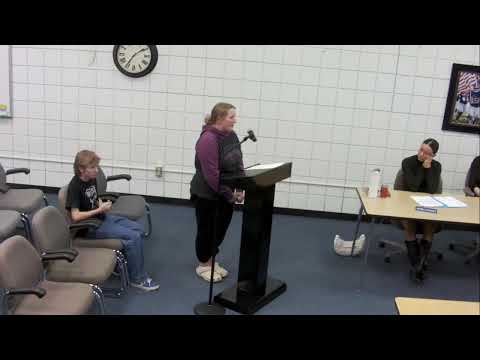
Rob Dietzel, an attorney with Troon Law Firm, told the Harper Creek Community Schools Board of Education on Dec. 9 that the legal obligation known as “least restrictive environment” (LRE) requires schools to keep students with disabilities in their home-school setting to the maximum extent appropriate.
“The least restrictive environment obligation isn’t new,” Dietzel said. “IDEA regulations specifically say that, to the maximum extent appropriate, students with disabilities must be educated in the same classes and programs as their non-disabled peers are educated.”
Dietzel described three legal touch points the district’s special-education teams must document before changing a student’s placement: (1) that the team considered and tried practicable supplementary aids and services; (2) that the nature or severity of the student’s disability makes a more restrictive setting necessary; and (3) that any harms from a move (longer transportation time, lost peer and staff relationships) were outweighed by the educational benefit. He said courts and federal guidance focus on whether a student is making “meaningful educational benefit” in the less restrictive setting, not simply on grades.
Dietzel pointed board members to federal Office for Special Education Programs guidance, the Individuals with Disabilities Education Act (IDEA) and recent U.S. Department of Education and Michigan Department of Education (MDE) statements that have prioritized LRE in compliance reviews. He said the MDE’s May 2022 guidance and the Sixth Circuit’s case law interpreting IDEA increase scrutiny of initial placements and moves up the continuum from general education to segregated settings.
Dietzel summarized audits elsewhere, including an Office for Civil Rights review of Yonkers, N.Y., that found boilerplate IEP language and insufficient documentation of efforts to support students in general education. He said MDE’s compliance work has included multi‑week reviews and that selected intermediate school districts would receive multi‑year technical assistance when issues are found.
Board members pressed Dietzel and each other about the practical limit of “supplementary aids and services” when staffing and resources are constrained. One board member said Calhoun County and local districts face staff shortages that make implementing supports difficult. Dietzel responded that districts must document reasonable, practicable attempts to implement supports and that creating new segregated classrooms without first demonstrating supported mainstreaming can itself raise compliance risks.
Dietzel also recommended making behavior intervention plans readable and implementable for staff in crisis situations and using focused, data-driven functional behavior assessments to design supports.
The presentation concluded with Dietzel urging the district to take LRE training and documentation into building-level IEP practice so teams have a clear record if placement decisions are ever reviewed.
The presentation was informational; no board action was requested or taken on Dec. 9.