Get Full Government Meeting Transcripts, Videos, & Alerts Forever!
Get email alerts on the Regional Climate Alignment topic
No spam. Unsubscribe anytime.
Regional climate agency outlines countywide priorities; highlights Sebastopol water-efficiency program and building-electrification work
Summary
Representatives of the Sonoma County Transportation Authority and the Regional Climate Protection Authority presented their countywide climate mobilization strategy to the Sebastopol Climate Action Committee, emphasizing building electrification, transportation emissions reductions and a water-efficiency program already active in Sebastopol.
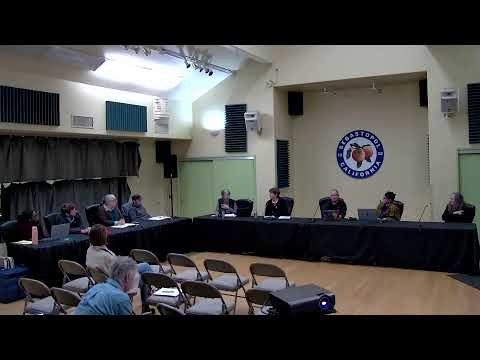
At a recent Sebastopol Climate Action Committee meeting, Anna Oliva, a Bay Area Regional Energy Network (BayREN) program specialist, and BC Capps, climate programs manager with the Sonoma County Transportation Authority (SCTA) and Regional Climate Protection Authority (RCPA), briefed committee members on RCPA’s climate mobilization strategy and on programs the agencies say can help local implementation.
Oliva and Capps described the mobilization strategy as a countywide plan adopted by the RCPA board in March 2021 to push jurisdiction-level actions under four pillars: decarbonization, carbon sequestration and ecosystem services, resilience and adaptation, and equity and community engagement. “Nearly 58% of countywide emissions are related to transportation, and over 23% are due to building energy sources,” Capps said, describing why the agencies are prioritizing transportation and building electrification.
On building energy, RCPA is developing an equitable building energy action plan to analyze the county’s building stock and recommend policy options such as reach codes, retrofit pathways, incentives and workforce development. BayREN staff described the Water Upgrade Save program, administered locally by RCPA, which Sebastopol’s water utility has enrolled in; Oliva said the city currently has 46 active Water Upgrade Save projects, one in a multifamily property and the remainder in single-family homes.
On transportation, the presenters highlighted the countywide active-transportation-plan update and an update to the comprehensive transportation plan, both intended to identify pedestrian, bicycle and countywide projects for future funding. Committee members raised Petaluma’s microtransit pilot and asked whether a similar shuttle could be available for Sebastopol; RCPA staff said they would research the history and options and coordinate with transportation colleagues.
Committee members also asked about contractor engagement and incentives for building electrification. Oliva said BayREN offers education and training for contractors and periodic contractor meet-and-greets but does not provide direct financial incentives to contractors; the program’s role, she said, is to connect contractors with available rebates and training. On water-rate impacts and conservation, Oliva said Water Upgrade Save is designed to support residential customers’ indoor-efficiency upgrades and that BayREN is beginning to develop an outdoor program; she noted that rate design and utility decisions remain with utilities and local rate authorities.
Microgrids and other resilience options were raised in public comment and committee discussion. RCPA staff cautioned that microgrid projects vary widely in scale and cost, that state rate design can make some microgrid investments financially unattractive, and that RCPA has applied to join a national peer-learning cohort on microgrid planning slated to begin in January.
RCPA offered follow-up: staff said they would return with deeper briefings on topics requested by the committee (contractor outreach, shuttle options and local Water Upgrade Save details) and provide links to county partners and programs. Committee members asked that RCPA and related county teams consider modular public presentations or library events so residents could access resources and billing consultations.
Ending: RCPA staff said they will follow up with the committee on requested items and offered to return for a subsequent meeting or public event. The committee heard the presentation and held a wide-ranging Q&A; no formal committee action or vote occurred during the meeting.