Get Full Government Meeting Transcripts, Videos, & Alerts Forever!
Get email alerts on the Homelessness topic
No spam. Unsubscribe anytime.
County housing office reports progress: 85% of 20,000 housing goal reached, permanent supportive stock and veterans programs highlighted
Summary
Office of Supportive Housing reported the county is about 85% toward a goal to house 20,000 people by 2025 and provided detailed data on temporary housing capacity, permanent supportive housing units and outcomes, and veteran-focused placements; the committee received the report.
The Office of Supportive Housing (OSH) told the committee Thursday it has housed a substantial share of the county’s target under the community plan and provided outcome data across temporary housing, permanent supportive housing and veterans programs.
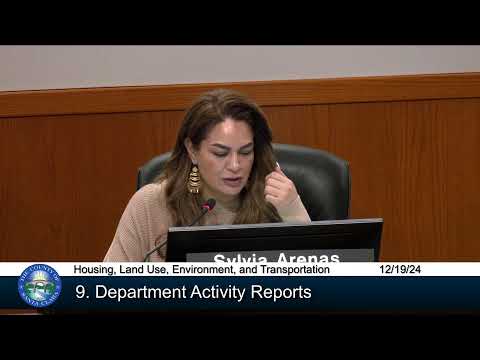
“Housing 20,000 folks by 2025 — as of this report we are 85% of that goal,” said Hillary Armstrong, deputy director for the Office of Supportive Housing, during the department’s verbal briefing.
Armstrong described program-level data: OSH reported total temporary housing capacity at roughly 2,700 units that can shelter about 3,600 people per night, and staff said interim housing models have produced the highest placement rates into permanent housing. “In the past year, around 8,000 people … participated in temporary housing programs throughout the county,” Armstrong said when summarizing program participation (transcript wording for household counts was recorded inconsistently in the public record).
On permanent supportive housing, OSH reported approximately 4,128 units of capacity. “We see high level enrollment — 94% of folks who are enrolled are housed,” Armstrong said. The department also highlighted retention and health connections: one care-coordination project showed 96% of participants retained housing 12 months or longer, and about three-quarters of those in permanent supportive housing were connected to primary care medical homes and behavioral-health services.
OSH also described veteran-focused results as a relative success: the county’s coordinated efforts and dedicated resources — including VASH and other veteran programs — generally show higher placement rates into permanent housing and lower returns to homelessness compared with system-wide averages. Armstrong said placements for veterans had outpaced new inflow of veterans experiencing homelessness for much of the recent period, though inflow increased in some recent months and staff have reached out to VA partners for more detail.
Committee members asked about equity metrics and supports for residents moving into permanent housing. A caller, Paul Sotto, urged OSH to include racial-equity metrics in its reporting; “What I found that was absent from your report though is an equity metric,” Sotto said. Armstrong said the office plans to strengthen equity tracking in 2025 by launching a racial equity action team in coordination with the Office of Diversity, Equity and Belonging and by embedding metrics into the 2025–2030 community planning process.
Supervisors also discussed services for residents transitioning into housing from shelters or reentry, and Armstrong described OSH’s client engagement and interim-site approaches that prepare households for tenancy and connect them to behavioral health and primary care services. “Our client engagement team…helps them get document-ready, making sure to help them gather all their documents…sometimes we enroll them in interim housing programs where they receive wraparound case management,” she said.
The committee voted to receive the report (items a–d). Chairperson Arenas and Vice Chairperson Subidien recorded affirmative votes. Staff said the office will continue to refine demographic reporting and equity metrics while maintaining interim and permanent housing placements and supportive services.