Get Full Government Meeting Transcripts, Videos, & Alerts Forever!
Get email alerts on the Housing Development topic
No spam. Unsubscribe anytime.
Planning commission rejects proposal to add public notification and hearings for multifamily permits
Summary
Commissioners voted unanimously to reject Resolution 24‑32, which sought to amend MSB 17.73 to require public notices, 600‑foot mailings and an administrative hearing for multifamily development permits; staff warned the change would add substantial staff time and likely fees and delays.
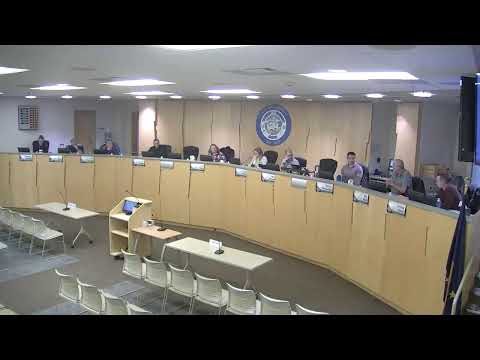
The Matanuska‑Susitna Borough Planning Commission on Dec. 2 voted unanimously to reject Resolution 24‑32, which would have recommended an ordinance amending MSB 17.73 (multifamily development design standards) to create a formal public notification and administrative hearing process for multifamily development permits.
Alex Straumann, the borough’s planning and land use director, told the commission the proposal would change ministerial multifamily permits—currently reviewed and signed by the planning director or designee—by publishing notice in the newspaper, sending mail notices within 600 feet and holding a hearing at the dais where the director would hear testimony and adjudicate the permit. “We would publish it in the newspaper. We’d send a public notification out within 600 feet of the affected property. And then, I would actually sit at the table at the dais here, myself and Lacey. I would gavel in. I would hear public testimony,” Straumann said.
Straumann said staff pulled application counts and workload estimates: 34 multifamily development permit applications were received in 2024. He estimated the added public‑notification process would require about 30 to 40 additional staff hours per permit—roughly 1,000 additional hours if that volume continued—equivalent to about six months of a full‑time employee. He warned the change likely would increase application fees and extend review time: “Right now, from the time we received a complete application, we have 10 days to process these. This would then change it to something like 2 months,” he said.
Commissioners expressed concern that the added processing time and cost could slow development and raise construction costs, which could make multifamily housing harder to build in a short construction season. “Anything that holds up, I just I’ve been in construction all my life, and when you start adding months onto it, next thing you know, you’re breaking ground in September and costs even go up even more,” one commissioner said. Others argued for greater public input where new multifamily structures could change neighborhood character; Commissioner Allen said long‑time residents deserve “some sort of input.”
Commissioner Flanders noted distinctions in how multifamily dwellings are classified and said the ordinance targeted larger developments (above five units) rather than smaller multifamily definitions used elsewhere. Straumann and other staff said the change would not alter design standards; it would alter the process, adding notification and adjudicative steps. Several commissioners said they were not in favor because it would slow approvals and increase costs; Commissioner Scoggin moved to approve the resolution, Commissioner McCabe seconded, and the motion failed unanimously.
The commission chair and staff noted that, because the commission communicates to the borough assembly through resolutions, a vote to reject could be coupled with an alternative resolution if the commission wants to forward a different recommendation to the assembly.