Get Full Government Meeting Transcripts, Videos, & Alerts Forever!
Get email alerts on the Homelessness topic
No spam. Unsubscribe anytime.
Love Inc. reports Project Homeless Connect turnout, local shelter use and housing needs to Kenai council
Summary
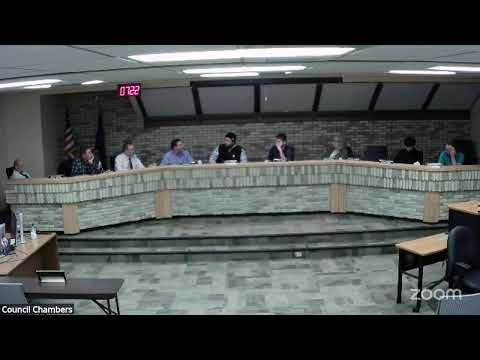
Leslie Rohrer, executive director of Love Inc., briefed the Kenai City Council on Feb. 19 about Project Homeless Connect 2025, reporting vendor participation, point-in-time intake counts, demographics and local shelter capacity and needs.
Leslie Rohrer, executive director of Love Inc., told the Kenai City Council on Feb. 19 that Project Homeless Connect 2025 drew a record array of services and showed persistent housing needs on the Kenai Peninsula.
Rohrer said, “This year's event was, I think, very good. Not just very good. We had 32 vendors,” and described the event's aim as connecting people “with the services efficiently and making sure that they have access to the resources that they need and to build a more compassionate community.”
The presentation summarized the Project Homeless Connect results and related local shelter data and service gaps. Rohrer said 16 people completed intake forms at the event; those intakes “represented family members of 85,” and about 49 percent of attendees said it was their first time participating. She said the event continues to record more women than men and that a large share of attendees report disabilities.
Rohrer and the council discussed how people were counted. Rohrer explained the point-in-time (PIT) count is the single-night survey required by the U.S. Department of Housing and Urban Development: “The point in time is the one night that we ask people, where did you sleep the night before? And that date is always chosen by HUD,” she said. She added PIT numbers are widely understood to undercount the unsheltered population.
Rohrer gave additional figures reported at the presentation: 12 percent of respondents said they slept in a car the night before the PIT survey; 37 percent reported being homeless for a year or more; roughly 50 percent reported their last permanent address was in Kenai; and 75 percent said they would use an emergency shelter if available. She listed top needs as food, clothing and employment, with secondary needs of transportation, utility help and vehicle repair. Rohrer also stressed lack of affordable housing as a major underlying issue.
On local shelter capacity, Rohrer said the Friendship Mission has a 12-bed capacity and typically houses about 10 men; she said its shelter requires residents to be capable of seeking employment and enforces a zero-tolerance policy for drugs and alcohol. She described the Nikiski Shelter of Hope as helping stabilize emergency-shelter numbers since it opened in December 2021. Rohrer also gave cumulative Shelter of Hope figures: “we've had 228 adults, 59 children, 36 pets, 54,000 meals, and 18,652 bednights,” and said the facility’s current in-house census was 16 adults, two children and three pets, with a 22-bed capacity.
Council members pressed for context and next steps. Councilman Douthat asked about men’s shelter capacity; Rohrer replied, “The Friendship Mission has 12 bed capacity, and they run about 10 gentlemen, most of the time.” Councilmember Daniel asked what actions a municipality could take; Rohrer cautioned that criminalizing sleeping outside can create barriers to housing and push people into harder-to-reach locations. Councilmember Daniel and others suggested the city could encourage affordable housing development; Rohrer noted Alaska Housing Finance Corporation programs and incentives that can support affordable units.
Rohrer said Love Inc. functions as a central intake point for the Kenai Peninsula continuum of care and processes prevention and placement referrals year-round: “Love Inc. is kind of the central intake for the Peninsula,” she said, and noted the agency processes about 300 families a year through its office.
The council asked for additional materials and longer trend tables; Rohrer agreed to provide expanded historical charts dating back to 2012.
The presentation concluded without formal council action; council members thanked the presenters and discussed opportunities to coordinate on housing and outreach work.