Get Full Government Meeting Transcripts, Videos, & Alerts Forever!
Get email alerts on the Public Service Budget topic
No spam. Unsubscribe anytime.
Public Service proposes $203.6 million operating budget with focus on refuse, sidewalks and LinkUS preparations
Summary
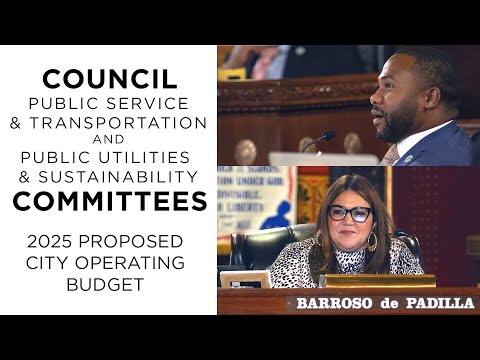
Deputy Director Steve Wetzel presented the Department of Public Service’s proposed 2025 operating budget of $203,600,000 to the Columbus City Council, describing funding sources and planned service priorities including refuse, sidewalks, snow operations and LinkUS corridor planning.
Deputy Director Steve Wetzel presented the Department of Public Service’s proposed 2025 operating budget to the Columbus City Council, saying the department’s request totals $203,600,000, a 3.3% increase over 2024, and will fund about 900 full‑ and part‑time positions.
“Overall, in 2025, we have a proposed funding level of $203,600,000 for the Department of Public Service, which represents a 3.3% increase or $6,500,000 as compared to the 2024 operating budget,” Wetzel said. He described the department’s five divisions — refuse collection, mobility and parking services, infrastructure management, traffic management, and design and construction — and explained funding sources and priorities.
Why it matters: The Department of Public Service oversees core, citywide services such as trash collection, snow and ice control, roadway maintenance, traffic signals and curb‑ramp accessibility. Changes to service levels, funding allocations and capital planning affect neighborhoods citywide.
Funding sources and highlights
- Total proposed budget: $203,600,000 (3.3% increase). Wetzel said roughly 67% of funding comes from non‑general‑fund sources; $88,000,000 (43.2%) is from the Street Construction, Maintenance and Repair Fund (largely gas tax and license fees), while the general fund provides about $68,100,000 (33.4%) primarily for refuse collection.
- Director’s Office: $14,300,000 to coordinate policy, asset management and the LinkUS program planning in partnership with regional agencies.
- Refuse collection: Just over $67,000,000 (general fund), supporting 240 full‑time personnel and weekly trash service for about 344,000 households. The budget continues weekly recycling and biweekly yard waste pickup, and adds about $2,300,000 to address illegal dumping, including additional solid‑waste inspectors and enforcement activity.
- Convenience centers: Approximately $1,500,000 in continued funding for two waste-and-reuse convenience centers that accept items such as electronics, bulky items and certain recyclables at Alum Creek and Georgesville Road.
- Mobility and Parking Services: $25,400,000 (about a 4.3% increase), driven in part by contractual costs for city-owned garages that came online in 2024.
- Infrastructure Management: $45,400,000 (about a 4.2% increase). The division handles pavement, street sweeping, snow and ice removal and right‑of‑way services. The budget includes $1,000,000 to design and construct Americans with Disabilities Act‑compliant curb ramps.
- Traffic Management: $25,000,000 to support traffic signals and pavement markings; the proposal includes $3,600,000 for signal work and $2,400,000 for traffic commodities.
- Design and Construction: $26,500,000 (about a 6.4% increase) for construction plans, inspection and materials testing to support city projects and LinkUS-related infrastructure.
LinkUS, Vision Zero, Bike+ and snow planning
Wetzel told council the department is already planning for LinkUS corridors, including West Broad Street, and has allocated internal staff time to design and planning. He said additional staff and personnel budget increases are expected in later years as the program moves from design into construction.
On Vision Zero (road safety) and the Bike+ plan, Wetzel said the department is reallocating existing positions to add personnel for those initiatives rather than creating new headcount this year. He described coordination with regional partners including COTA, Franklin County and the Mid‑Ohio Regional Planning Commission on transit and multimodal investments tied to LinkUS.
Snow and winter operations
Wetzel said the city’s snow-and-ice plan is updated annually and described stockpiles and planning: Columbus can store up to 30,000 tons of salt and uses a mix of materials (salt, brine, beet juice and other treatments) depending on conditions. He said the department treats and plows roughly 46,100 lane miles during winter events and has added a pilot using auxiliary staff and private contractors ($250,000 allocated) to get more equipment into neighborhoods for heavy snow events.
Refuse, recycling and anti‑dumping work
Wetzel described gains in recycling diversion after returning to weekly pickup and said the division continues a multifamily recycling pilot that will be funded in 2025. He said refuse crews picked up nearly 3,000 tons of illegally dumped material in the prior year and the budget includes funding for a litter response team and more solid waste inspectors to enforce Title 13 and prosecute dumpers when warranted.
Council questions and next steps
Councilmembers asked about the LinkUS timeline, how mobility user fees support programs such as an e‑bike pilot, and how the department is adjusting resources amid a tighter overall budget. Wetzel said user fees for parking and mobility are largely self‑supporting and that the department models five‑year revenue projections. Councilmembers also pressed for transparency on street‑lighting prioritization and a public graphic similar to the Blueprint Columbus schedule to show neighborhood timelines.
Ending note
Wetzel said the department will continue outreach and coordinate with suburban partners on intergovernmental agreements for services such as snow removal. Councilmembers thanked department staff and noted continued interest in service‑level improvements for sidewalks, streetlights, snow response and litter reduction.