Get Full Government Meeting Transcripts, Videos, & Alerts Forever!
Get email alerts on the Transit Funding topic
No spam. Unsubscribe anytime.
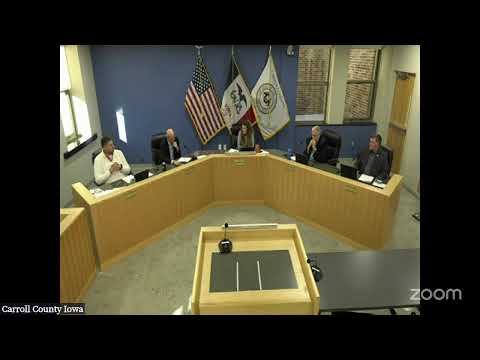
Carroll County staff seek roughly $42,000 for transit, COG dues and housing trust match
Summary
County staff presented a FY26 funding request covering transit per‑mile capital, Council of Governments dues and a regional housing trust fund match; officials discussed ridership recovery and longer trip distances tied to Medicaid and school contracts.
County staff presented a combined fiscal‑year 2026 funding request that includes a per‑mile capital charge for general public transit trips, Carroll County’s share of Council of Governments (COG) dues, and a requested match for the Region 12 regional housing trust fund.
The most newsworthy piece of the presentation was the request that the county adopt a 6¢ per mile capital charge for general public rides (non‑contract service) used to purchase new buses, and to cover transit‑related capital costs. The presenter said Medicaid and other contract services (for example, trips for New Hope) are excluded from that per‑mile calculation. The presenter estimated the county’s per‑mile charge next year would be “around $1,200,” and reported a total combined request of $42,001.78 covering COG dues, transit system items and the housing trust fund match.
Why it matters: adopting the plan would help the county fund transit capital needs and maintain its share of a regional housing trust fund managed through the COG. Board members asked how ridership trends looked and whether the per‑mile estimate reflected post‑pandemic changes.
During the discussion, the presenter told the board that ridership has not yet returned to pre‑pandemic levels system‑wide but is slowly recovering. The presenter said trips are longer on average, driven in part by more medical trips to Des Moines, Omaha and other regional destinations, and by contract service for school districts. The presenter added the system now runs “over a million miles a year” and described the in‑town fare as about $7 to $7.50 per person and rural fares around $1.75 to $1.80 per running mile. The presenter said Elderbridge funding can make some rides fare‑free for qualifying elderly riders.
Board members asked clarifying questions about the underlying ridership data and confirmed the housing trust fund match is an equal request shared among the six counties in the Region 12 COG. The presenter said the COG housing request is a level request and that Region 12 tracks payments and benefit equalization across counties over a five‑year period.
No formal vote on this specific consolidated funding request was recorded in the transcript during the presentation; staff said they will reach out again once budget figures are finalized.
Ending: Staff indicated they would follow up with the board as the FY26 budget is finalized and will provide more precise figures and supporting documentation for the transit capital charge and the COG housing match.