Get Full Government Meeting Transcripts, Videos, & Alerts Forever!
Get email alerts on the Infectious Disease Surveillance topic
No spam. Unsubscribe anytime.
Health staff report increases in some bacterial infections, Legionella fatalities and ongoing COVID presence
Summary
County epidemiology staff reviewed 2024 surveillance: higher campylobacter variability, more antibiotic‑resistant enterobacterales compared with a five‑year average, two Legionella cases this year (high fatality risk), and continued low but present COVID activity.
Axel, presenting Cochise County surveillance data, told the board that 2024 case counts remain provisional and that several trends warrant attention.
Enteric infections: Axel reported campylobacter case counts differ substantially from 2023 and that salmonellosis detection likely underestimates community burden because surveillance captures only a fraction of infections. He said salmonella clusters across counties can affect Cochise counts.
Antibiotic resistance and healthcare‑associated infections: The county recorded 10 carbapenem‑resistant Enterobacterales cases in 2024 versus nine in 2023; compared with a 2018–2022 five‑year average, current CRE counts were about seven times higher than expected. Axel said this pattern signals growing antibiotic‑resistant colonization among patients and elevated attention to infection prevention is needed.
Legionella and mortality: Axel cautioned that Legionnaires’ disease has a high case‑fatality rate. The county had two Legionella cases this year and five last year; when accounting for mortality, that condition “gets really close to 60% of those cases ending up passing away,” making prevention and early detection important, he said.
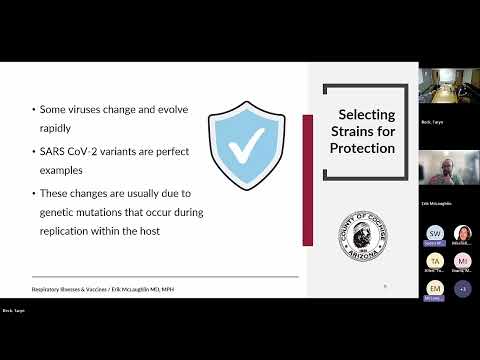
Other conditions and COVID: Valley fever (coccidioidomycosis) was described as “about what we would expect.” MRSA cases have declined this year, which Axel attributed to improved infection‑prevention and hand hygiene. On COVID, Axel showed modest but persistent detection and said the county saw low summer incidence that began to rise as schools returned; recent weeks had about 60–80 detected cases, “widespread” across the county. He discussed variant naming and sequencing work used to inform vaccine formulation.
Mpox status: Axel said Cochise County had no mpox cases in 2023 or 2024 and only two cases in 2022. The department had 13 mpox vaccine doses remaining that were close to expiry; state distribution remained under discussion.
Bottom line: Surveillance shows mixed trends — declines in some conditions (MRSA), increases or clusters in others (campylobacter, CRE, sporadic Legionella) — and continued low but present COVID transmission across the county.