Get Full Government Meeting Transcripts, Videos, & Alerts Forever!
Get email alerts on the Campaign Finance topic
No spam. Unsubscribe anytime.
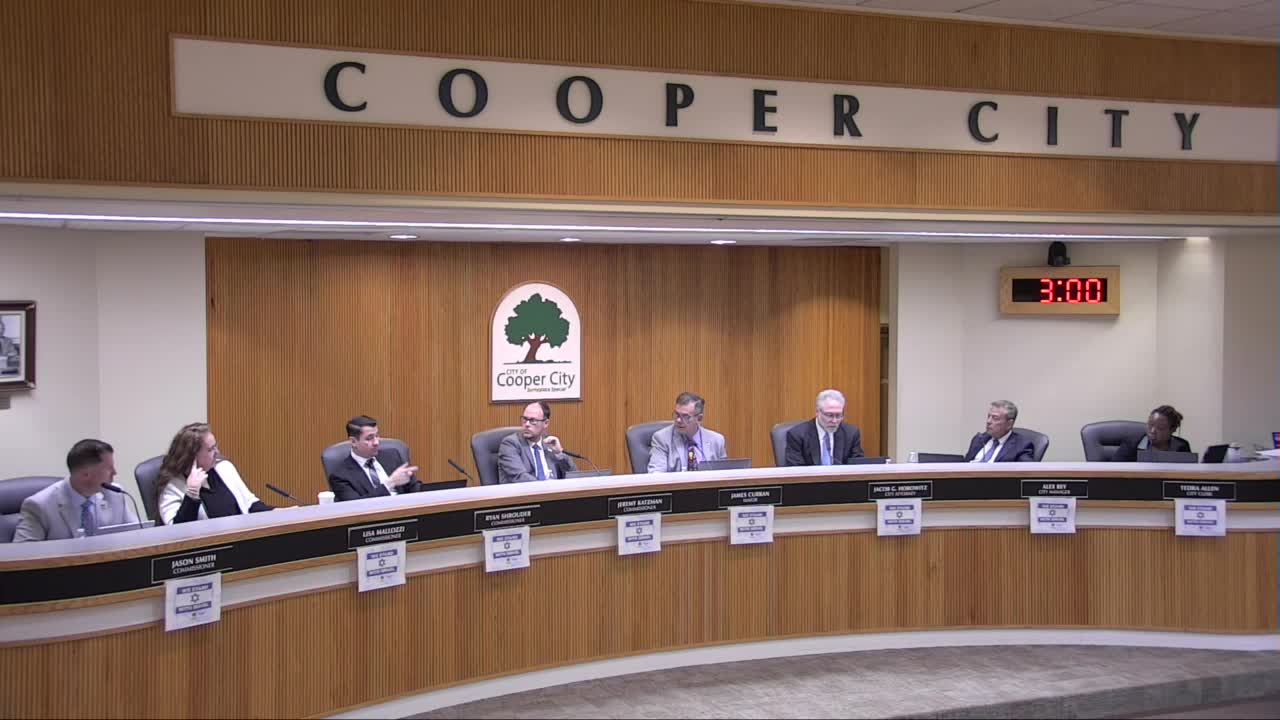
Cooper City commission approves ordinance lifting developer ban on campaign contributions after heated debate; 3-2 vote
Summary
On second reading the commission approved Ordinance 25-1, removing a city prohibition on campaign contributions from real estate developers. The measure passed 3-2 after commissioners debated practical enforcement and disclosure issues.
The Cooper City Commission voted 3-2 on Feb. 11 to adopt Ordinance 25-1, which removes a city prohibition on campaign contributions from real estate developers that had been in the municipal code. Passage followed extended discussion about practical enforcement, public notice and how to avoid inadvertent violations by candidates.
The measure as adopted eliminates the existing ban on developers contributing to city candidates. Supporters of the ordinance said the prior restrictions were overly broad and that the city had already hard-coded other disclosure and lobbyist-registration rules. Opponents warned removal of the ban could create the appearance of influence by developers and argued it could expose candidates to later challenges and online attacks if contributors held development interests.
Commissioner Katzmann and Commissioner Schroeder voted no on the measure; Commissioners Smith, Mallozzi and Mayor Curran voted yes. During debate staff and the city attorney outlined practical complications in drafting a narrower prohibition tied to pending development applications. The city manager and city attorney said that lists of pending applications could be compiled and published, but that defining a workable, administrable time window and the exact boundaries of a "developer" definition would create enforcement complexity and potential fairness issues for candidates who accept small-dollar donations.
A previously proposed amendment from Commissioner Schroeder that would have restricted contributions from developers with pending applications or approvals within six months of a candidate receipt was discussed but not adopted. The commission's final vote removed the prohibition from the code while staff agreed to continue public-facing disclosure improvements and to post vendor and lobbyist lists online to help candidates and the public identify potential conflicts.
What happens next: The ordinance becomes effective as provided in the item (per the city clerk's timeline for codification); staff said they will continue to enhance online disclosure tools (vendor and lobbyist lists, and a searchable contributions registry) to make potential conflicts easier to spot for candidates and the public.