Get Full Government Meeting Transcripts, Videos, & Alerts Forever!
Get email alerts on the Civil Rights Compelled Speech topic
No spam. Unsubscribe anytime.
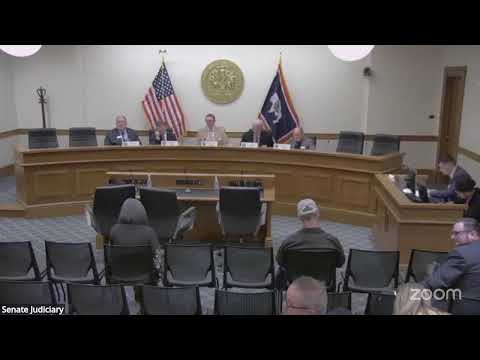
Committee advances bill banning government from compelling employees to use preferred pronouns
Summary
The Senate Judiciary Committee advanced Senate File 77 after testimony from state agencies, employers and advocacy groups. The bill prohibits government entities from requiring employees to use another person’s preferred pronouns; committee amendments removed statutory damages and governmental‑immunity carveouts before a final committee vote.
The Senate Judiciary Committee on an unspecified date considered Senate File 77, a bill titled in committee as "Compelled speech is not free speech," which would prohibit the state and its political subdivisions from requiring an employee to refer to another employee using the other person’s preferred pronouns.
Senator Hutchings, the bill sponsor, described the measure as “plain and simple,” saying, “The government shall not compel someone to say something they do not want to say.” She told the committee the bill would prohibit a government employer from making the use of preferred pronouns a condition of employment or a prerequisite to receiving grants, permits, contracts or licenses.
State and public‑sector witnesses gave mixed views. Dr. Ben Moritz, Executive Director of the Community College Commission, said the commission had no formal position but warned the measure could “have a chilling effect on either, academic discourse or moving on even in the hiring procedures.” Tate Mullen of the Wyoming Education Association noted existing federal law under Title VII and the Bostock decision may expose employers and employees to hostile‑work‑environment claims in some cases.
Supporters argued the bill protects conscience and free‑speech rights for government employees. Matt Sharp of Alliance Defending Freedom said federal and state courts have recently found protections for employees who decline to use pronouns that conflict with their beliefs, and argued the statute should preserve remedies for employees disciplined for refusing to use preferred pronouns.
Opponents, including Sarah Burlingame of Wyoming Equality, said the bill could enable bad‑faith harassment and would not stop those who deliberately misuse pronouns to haze or bully coworkers; she cautioned the bill offers no mechanism to prevent such misuse.
During committee markup Senators adopted amendments that removed the statute’s monetary‑damages language and also deleted a provision that would have created an exception to the Wyoming Governmental Claims Act. As amended, the committee left in a civil remedy allowing an aggrieved person to seek declaratory or injunctive relief in a court of competent jurisdiction but removed language authorizing recovery of damages and related exemptions from governmental immunity. Senator Crago moved the amendment to strike damages; the amendment carried. A subsequent amendment deleting the Governmental Claims Act immunity carve‑out also carried.
After amendments were adopted, the committee voted on final passage by roll call. The transcript records five ayes and no oppose votes in the committee on the amended Senate File 77; the bill advanced from committee.
The committee discussion highlighted a narrow scope of the bill as written — protecting government employees from being compelled to use specified pronouns — while witnesses and members debated potential downstream effects for academic discussion, hostile‑work‑environment claims under federal law, and the interplay of remedies and governmental immunity.