Get Full Government Meeting Transcripts, Videos, & Alerts Forever!
Get email alerts on the Blood Supply Autologous Directed topic
No spam. Unsubscribe anytime.
Committee hears split testimony on autologous and directed blood donation bill; consideration carried over
Summary
Lawmakers heard testimony for and against House Bill 135, which would authorize and clarify autologous and directed blood donations and allow reasonable fees. Blood‑service providers warned of safety and resource concerns; proponents cited patient choice and historical contamination. The committee postponed further action to a future meeting.
The Labor, Health & Social Services Committee heard testimony on House Bill 135 on Jan. 20, 2025. The bill, sponsored by Representative Guggenmoss, would authorize autologous (self) and directed (designated donor) blood donations, allow blood banks to charge reasonable fees, and set definitions and rule‑making authority for the practice.
Supporters said the bill protects patient choice and allows patients to receive blood from known donors when they or their physicians prefer that option. Gil Levy of Pureblood Registry and other witnesses described the measure as restoring an established patient option and urged the committee to ensure that hospitals and blood centers facilitate autologous and directed donations. “This initiative ... ensures that families like mine can access trusted blood donations from close friends, family, and community during medical procedures,” Levy said by Zoom.
Opponents, led by Vitalant’s chief medical and scientific officer Dr. Ralph Vassallo, urged caution. Vitalant, which operates community blood collection in Wyoming, told the committee directed donations are rare, strictly regulated and typically handled with physician and blood‑center physician oversight. Vassallo said the bill “seeks to remove that blood center physician involvement, which will most certainly lead to adverse patient outcomes,” and argued that an increase in directed donations could divert scarce resources from the community blood supply.
Testimony reflected sharply different priorities. Supporters — including patient advocates and private registries — emphasized autonomy, concerns about contaminants and the belief that patients should be able to choose donors for themselves or family members. Some public commenters referenced research they said shows spike proteins or other vaccine‑related materials persist in blood; those claims were presented as testimony and not reported here as findings.
Vitalant and other health‑care witnesses described the practical process for autologous and directed donations: a prescribing physician provides an order, blood‑center staff and blood‑center physicians evaluate donor suitability and the donation is collected and tested. Dr. Vassallo told the committee less than 0.04% of transfusions are autologous or directed, and warned that directed donations can pose particular risks if donors conceal recent high‑risk behaviors or if donor evaluation is shortened.
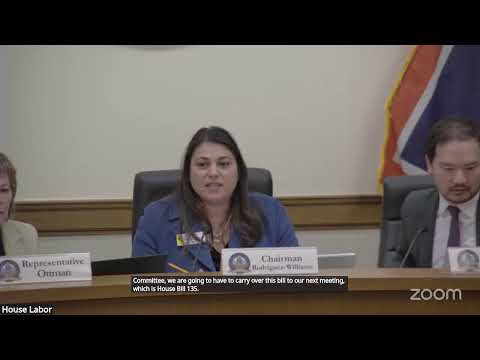
Committee action: the committee did not vote on HB 135. Members limited public testimony to shorten the hearing and ultimately carried the bill over to the committee’s next meeting so registered lobbyists and additional witnesses can testify and the panel can consider any technical amendments.
Context and next steps: proponents asked the committee to preserve patients’ ability to request autologous or directed blood and to avoid administrative hurdles and high fees that, they said, make the option impractical. Vitalant asked the committee to preserve blood‑center physician oversight and to allow cost recovery for collection and physician review. The committee agreed to resume consideration at its next scheduled meeting, beginning with registered lobbyist testimony and then working the bill.
Ending: HB 135 will return to committee for additional testimony and potential amendment; the sponsor and witnesses said they will continue to work with blood‑service providers to address safety and operational concerns.