Get Full Government Meeting Transcripts, Videos, & Alerts Forever!
Get email alerts on the Public Health Mask Vaccine Policy topic
No spam. Unsubscribe anytime.
Labor, Health & Social Services Committee advances bill limiting mask, vaccine and testing requirements for state‑subsidized entities
Summary
The committee voted to send House Bill 96 to the floor after narrowing it to COVID‑19; proponents said the measure prevents discrimination for people who decline masks, tests or vaccines, while health officials and industry groups warned it could conflict with federal rules and put nursing homes and airports at financial risk.
The Labor, Health & Social Services Committee voted to advance House Bill 96 on Jan. 20, 2025, after adding language that limits the bill to COVID‑19 protections. The bill, sponsored by Representative Darren McCann, would prohibit discrimination by ‘‘persons’’ against people who decline masks, vaccines or testing where the person receives any state or federal subsidy.
The bill’s sponsor and supporters said the measure protects individual liberty for people who choose not to wear masks, receive a COVID‑19 vaccine or take diagnostic tests. “This bill eliminates discrimination for not wearing a mask, not receiving a so called vaccine, or not getting tested,” said former Representative Ward, a guest on behalf of the sponsor. Representative Darren McCann, the bill sponsor, described his medical background and said the bill targets policies that deny services or employment to people who decline mask, vaccine or testing requirements.
Why it matters: testimony before the committee highlighted a practical legal conflict. Federal agencies such as the Centers for Medicare & Medicaid Services (CMS) still require infection‑control measures in some health care settings, and federal grant assurances can obligate airports and other recipients to follow federal directives during a public‑health emergency. Health department and industry witnesses told the committee that, if state law bars facilities from enforcing masks or testing during an outbreak, those facilities could face federal citations or penalties.
Department of Health Director Stefan Johansen told the committee that nursing facilities remain a common example where federal infection‑control expectations continue to apply. He cautioned that, “it just creates a little bit of a potential conflict between two different regulatory requirements,” and that facilities could find themselves caught between state law and federal survey or enforcement actions.
Hospital and long‑term care representatives said the bill in its original form could worsen staffing and financial strain. Eric Boley of the Wyoming Hospital Association and LeadingAge Wyoming warned, “I have fears that if this legislature passes in its current form, we'll lose more nursing homes,” citing staffing pressures and the high share of long‑term‑care revenue tied to Medicaid. Devin Brubaker, airport director for Southwest Wyoming Regional Airport, told the committee the state’s 40 public‑use airports receive roughly $50 million annually in FAA grants and that the bill “would put us in severe conflict with potential future obligations from the federal government.”
Supporters from the public and several organizations urged the committee to protect what they described as medical‑choice rights. Former Representative Sarah Penn and other public commenters described personal experiences being denied care or employment when they would not comply with mask or vaccine requirements. The Wyoming Farm Bureau Federation said its membership “support[s] eliminating discrimination based on vaccine or mask status, especially in reference to COVID‑19.”
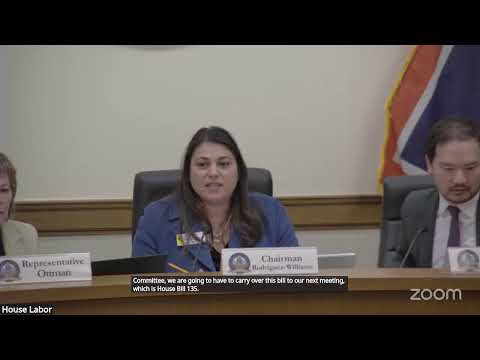
Amendments and committee action: committee members considered multiple amendments. Members approved an amendment clarifying that the bill’s prohibitions apply “for COVID‑19 purposes” (the amendment passed in committee). A separate amendment to reduce civil penalties from $5,000 to $1,000 failed, and proposed carve‑outs for long‑term care and federally mandated airport areas were also defeated in committee debate. The committee then voted to advance the bill as amended to the full House. The roll call on the committee motion recorded seven votes in favor, one opposed and one excused; the committee chair announced the bill would be prepared for a floor presentation.
What the bill would do and what remains unsettled: as drafted and amended by the committee, HB 96 would prohibit discrimination against individuals who decline to wear masks, receive COVID‑19 vaccines, or undergo testing when the entity enforcing the requirement receives state or federal subsidies. The statute uses the word “person” as defined by Wyoming law and, per sponsors’ testimony, is intended to include private and public entities that receive taxpayer funds. The bill leaves unresolved how conflicts with federal conditions of participation or grant assurances would be reconciled; the Department of Health and industry witnesses said those conflicts would likely be resolved administratively or in the courts.
Next steps: committee staff said the bill sponsor will be prepared to present the amended bill on the House floor and that further amendments are possible during floor consideration.
Ending: The committee’s action sends HB 96 to the full House with a narrower COVID‑19 focus than originally proposed. The measure’s supporters said it restores individual choice; health‑care and airport witnesses told the committee the state should either add narrow carve‑outs or provide financial protections for entities that could face federal penalties if state law and federal obligations diverge.