Get Full Government Meeting Transcripts, Videos, & Alerts Forever!
Get email alerts on the Housing topic
No spam. Unsubscribe anytime.
Queen Creek staff: town has zoned land for next five years of housing growth
Summary
Town planner Sarah Clark presented a state-required housing needs assessment that found Queen Creek has sufficient zoned land to meet a five‑year growth projection but recommended steps to encourage housing types and speed permitting.
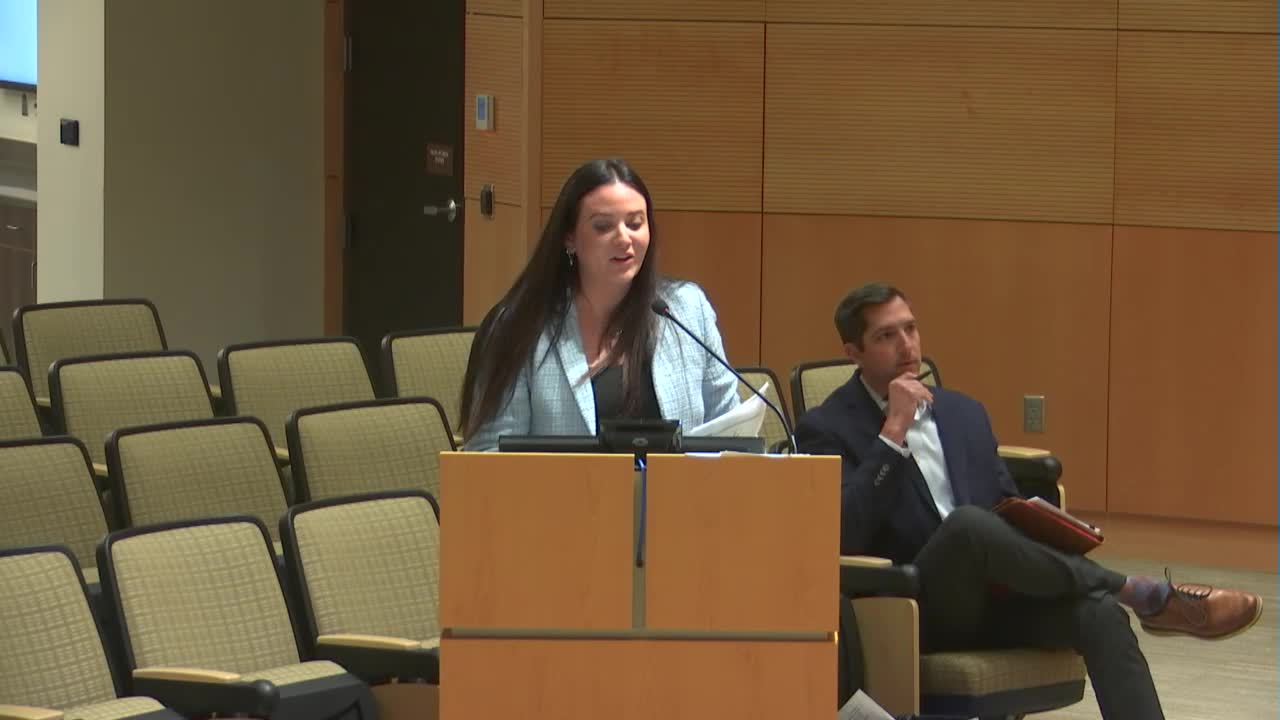
Sarah Clark, senior planner in Queen Creek’s Development Services Department, told the Town Council on Jan. 14 that a housing needs assessment prepared with consultant Michael Baker shows the town has enough vacant zoned single‑family and multifamily land to accommodate projected growth over the next five years.
The presentation summarized demographic and housing data, projected unit needs and recommended next steps to encourage a range of housing types and reduce development timelines.
The report was prepared to satisfy 2024 legislation, SB 1162, which requires municipalities to publish a housing needs assessment and a housing plan that addresses projected population and job growth, available zoned land and the number of units needed across income levels. Clark said Queen Creek’s median household income in 2022 was about $127,000 and its median age is 36, and that single‑family housing makes up about 94% of the town’s housing stock as of 2023.
On the core five‑year projection the assessment used the town’s planning inputs — a 19,000 population increase from the last budget cycle and a 2.8 household size — and estimated demand of roughly 5,000 single‑family units and 1,800 multifamily units, for a total of about 6,786 units. Clark told council that the town’s current zoned land has “a significant surplus” of capacity to accommodate that need.
The plan’s recommendations focus on facilitating development rather than identifying a land shortage. Clark highlighted four recommended actions: continue to evaluate density requests within general‑plan and buffer/transition parameters; coordinate with the Arizona State Land Department on state land proposals; facilitate accessory dwelling units (ADUs) following the council’s recently updated ADU ordinance; and encourage smaller bedroom counts in rental housing. She also noted the town is working to reduce permitting and development timeframes to help get housing to market faster.
Councilmembers asked clarifying questions during and after the presentation. Councilmember Benning asked how state assured‑water‑supply rules affect buildable land; Clark said she would follow up with additional research and staff expertise. Councilmember Brown asked whether the assessment’s capacity numbers included platted-but‑undeveloped projects; Clark replied the analysis included both undeveloped platted projects and vacant unplatted parcels and used conservative density assumptions (for example, about 80% of maximum multifamily density to reflect typical development patterns).
Clark said the assessment will be republished every five years as required by statute and that housing will be an element of the town’s General Plan update slated to begin in 2025.
The presentation concluded with Clark making staff available for follow‑up questions and additional detail.