Get Full Government Meeting Transcripts, Videos, & Alerts Forever!
Get email alerts on the Land Use Transylvania Plnma R24 18 topic
No spam. Unsubscribe anytime.
Residents urge hearing on Transylvania ballfield zoning; council sets Feb. 25 public hearing
Summary
Dozens of Radcliffe‑Marlborough residents pressed the Lexington-Fayette Urban County Council to oppose a zone change for a Transylvania University ballfield redevelopment, citing traffic, flooding and density concerns. Planning staff and the planning commission recommended approval; the council scheduled a public hearing for Feb. 25 at 5:30 p.m.
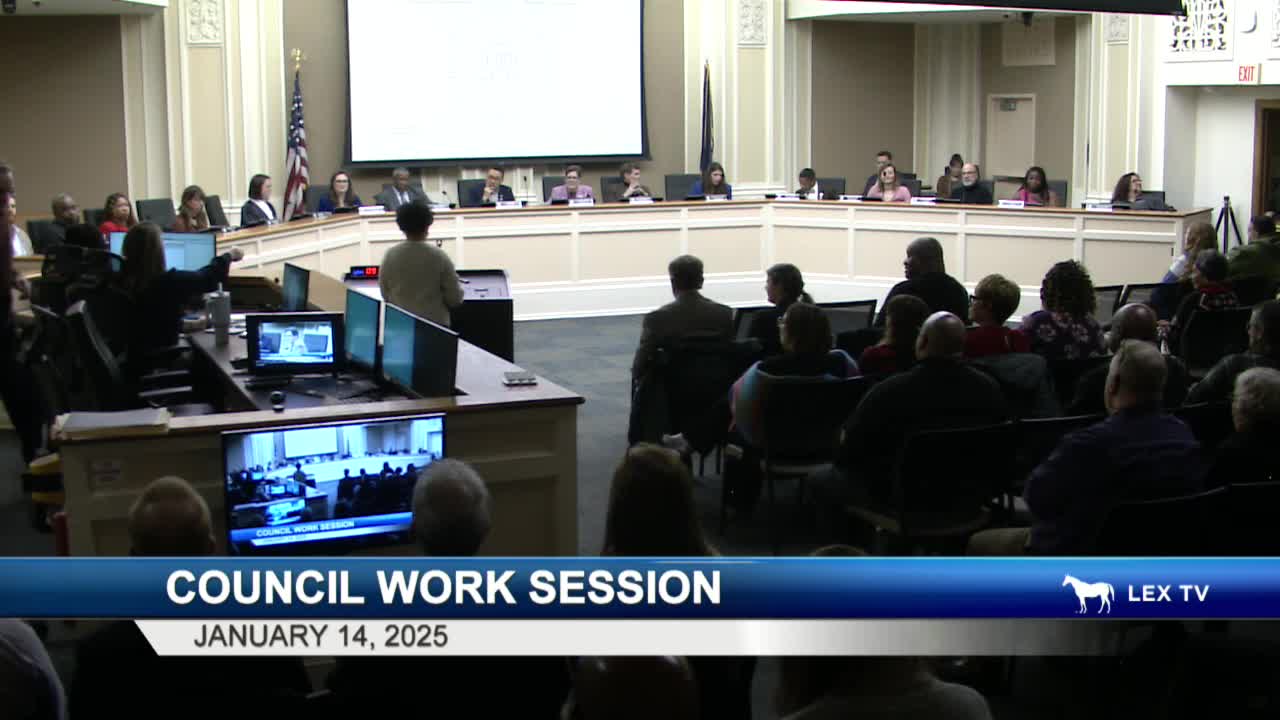
Dozens of residents of the Radcliffe‑Marlborough neighborhood asked the Lexington‑Fayette Urban County Council on Jan. 14 to oppose a proposed zone change that would allow housing on Transylvania University’s former baseball field and asked the council to hold a public hearing so neighbors’ concerns can be heard.
Neighborhood speakers urged the council to pause the zoning change over traffic, drainage and density worries. “Why is everything looked upon that’s less desirable located or relocated on the north side of town?” resident Michelle Hutchinson said, asking for a public hearing. Scott Sloan and Rachel Sloan, both longtime neighbors, said existing sewer and stormwater problems on Haggard Lane and surrounding streets would be worsened by the proposal and asked the council to delay action until officials study traffic and infrastructure impacts.
Neighbors reiterated several recurring concerns: traffic congestion at the Haggard Lane/North Broadway corridor and nearby interstate ramps; aging sewer and stormwater systems that residents say already cause basement flooding; on‑street parking pressures if the multifamily portion is built; and loss of roughly 13 acres of green space. “The neighborhood was not designed to accommodate the development being proposed … without significant investment in our road and sewer infrastructure,” Scott Sloan said. Tim Mitchell told the council residents estimate the development could add “468 cars” if two cars were parked per dwelling.
Why it matters: Planning staff recommended approval of the zone change, and the Lexington planning commission voted 10–0 to recommend approval on Dec. 12, 2024. The council’s decision whether to hold a full public hearing was framed by those prior, unanimous endorsements and by residents’ demands to examine infrastructure and safety impacts before zoning changes move forward.
Council action and debate: Council member Tyler Morton moved to place the zone map amendment (PLNMA r24‑18) for Transy Property Owners LLC — parcels at Haggard Lane and Radcliffe Road — on the council docket with a public hearing. Council member Gray seconded the motion. Council members debated whether the council should re‑hear a matter after unanimous planning commission approval; Council member Wu said staff recommendation and the commission’s 10–0 vote counseled against duplicative hearings, while Morton and several other members said the community should be allowed to speak to the full council.
Council member Ellinger proposed an amended start time so the hearing could begin at 5:30 p.m. instead of 6 p.m.; the amendment was adopted. Council member Lynch announced a recusal from the later electronic vote because of a conflict stated on the record. The council recorded the result as “yeas 9 to 5” with one recusal; the mayor directed staff to schedule the hearing for Feb. 25 at 5:30 p.m.
Planning and legal context: Planning staff and the planning commission’s unanimous recommendation were cited several times during the debate. Planning staff and Director Duncan also told the council that state legislation (House Bill 443) will change how final development plans are reviewed in the future, noting that a final development plan approved after a zone change may become a ministerial review rather than requiring another public hearing. Director Duncan and planning staff also explained that the council’s legal authority at a zone‑change hearing is limited to deciding whether the proposed zoning is appropriate; detailed elements of a development plan typically return to the planning commission.
What neighbors asked for: Neighbors asked the council to (1) oppose the zone change, (2) require an independent study of traffic and stormwater impacts before zoning is approved, (3) prioritize homeownership over rental apartments in the proposal and (4) preserve more green space. Developers and several council members noted the stated city need for affordable housing and said the development team had met multiple times with neighbors, though neighbors said those meetings felt perfunctory.
Next steps: The council set a public hearing for Feb. 25 at 5:30 p.m. Staff told the council they will continue to work with the applicant, the neighborhood, and relevant city departments — including traffic engineering and the Division of Water Quality — ahead of that hearing.
Ending: The Feb. 25 hearing will be held in the council chamber; members of the public may register to speak and the planning commission record and staff reports will be part of the hearing packet.