Get Full Government Meeting Transcripts, Videos, & Alerts Forever!
Get email alerts on the Education Theater Facility topic
No spam. Unsubscribe anytime.
Stewart County parents and board members begin planning for new high school theater
Summary
Public speakers and parents urged the Stewart County School Board to pursue construction of a dedicated theater for the high school drama program. Board members directed staff to research designs, budgets and grant opportunities and to return with proposals at the March meeting.
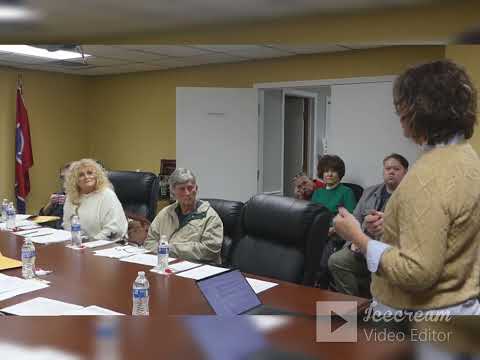
Stewart County — Public comments and a formal presentation at a recent Stewart County School Board meeting pressed the board to pursue construction of a dedicated theater for the county high school’s drama program.
Advocates said the current space is unsafe and inadequate. Rita Peters, a Stewart County resident who said she attended the county high school and whose children also attended, described the program’s needs and asked the board to “authorize someone, whether it be an organization, a group, a committee, to look for and find grants, to apply for grants and secure funds for this facility.”
Why it matters: Board members acknowledged the drama program’s persistent facilities shortfall and agreed to a work plan rather than approve immediate spending. A theater would change where students rehearse and perform, affect school programming and could create new community revenue opportunities, board members said.
Details of the request and local testimony Sydney Smith, who identified herself during the public-comment period, urged the board to “support the future of our high school drama department” and described the program as an important part of students’ learning and discipline. Adam Smith, who identified himself as a parent and described frequent visits to the current facility, told the board the backstage area had major water problems and structural issues, at one point saying, “this pillar is being held by duct tape.”
In a formal presentation, Rita Peters said the drama program sells out shows, runs multiple productions each year with about 35–40 students participating per production, and faces recurring costs for scripts, costumes and basic needs such as water at the performance site. Peters cited grant opportunities she had located — including a $200,000 “creative placemaker” nonmatching grant that opens again in June and a rural community arts grant that can be up to $500,000 — and said she had found about 15 grant prospects during preliminary research.
Board response and next steps Board members did not approve construction funding at the meeting. Instead, they set a planning process and several staff follow-ups: they asked board members and stakeholders to collect examples of local theater designs and likely budgets; tasked staff to compile those examples and associated budget estimates; asked staff to search for and vet possible grant writers; and set a follow-up status report for the March meeting. School finance staff (referred to in the meeting as Mr. Gwen) was identified as the point for initial grant review, and the director’s office said it would handle legal and contract review before any grant application or contract is finalized.
Board members emphasized scope-setting before design work. As one board member remarked during the discussion, the size and internal features of a theater (seating capacity, plumbing, access from school buildings) drive cost and grant eligibility, so the board wants to agree on program priorities before seeking architects or issuing requests for qualifications.
What the board did not do No appropriation or commitment of district funds was made at the meeting. Board members discussed pursuing grants, forming a committee and preparing designs and budgets; those directions were treated as staff assignments and planning steps rather than formal contracting or budget votes.
What comes next The board asked for samples of nearby theaters, rough budget figures and candidate grant writers to be provided at the next board meeting in March so members can consider an RFQ for architects and formal budget action if warranted.