
Providers urge continued investment in behavioral health, children’s services and victim supports
Get AI-powered insights, summaries, and transcripts
Sign Up Free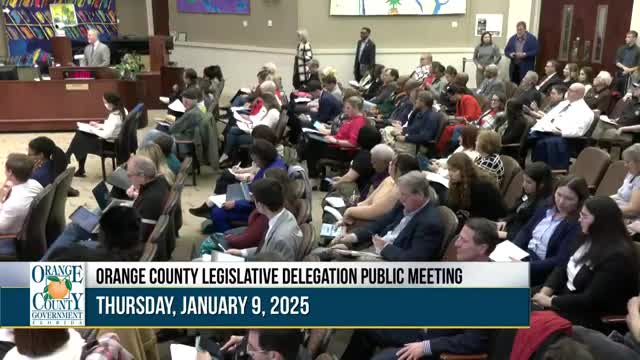
Summary
Representatives of behavioral‑health providers, child advocacy and victim service centers asked the Orange County legislative delegation to maintain and increase funding for behavioral health staffing, prevention programs, victim services and early childhood interventions.
Several nonprofit leaders told the Orange County legislative delegation that behavioral‑health and child‑focused programs in Central Florida need sustained state support as pandemic‑era and one‑time funds expire.
Todd Dixon, vice president of community relations for Aspire Health Partners, said local behavioral‑health providers have seen significant funding increases in recent years but warned that many of those increases stemmed from temporary COVID‑era or block grant sources that are now ending; he asked the delegation to seek sustainable funding to avoid service cutbacks next year.
Ansel (senior director, Howard Phillips Center for Children and Families at Orlando Health Arnold Palmer Hospital for Children) described outcomes from several of the center’s programs: an early‑intervention program serving over 4,000 infants and toddlers and a prevention program that reports high rates of breaking the cycle of abuse for enrolled families. He asked legislators to help sustain and expand services and reimbursement for home‑based early intervention and school‑based mental‑health clinics.
Louie Damiani, executive director of the Victim Service Center of Central Florida, described the center’s 24/7 crisis response work and forensic exam services for sexual‑assault victims and thanked legislators for preserving funds during recent statewide cuts; he urged continued support to avoid program reductions.
Marnie Stallman, president of the Mental Health Association of Central Florida, asked the delegation to support an appropriations request to expand a free mental‑health clinic (Outlook Clinic) to serve more ZIP codes and to sustain services for the uninsured.
Ending: Providers said the county’s growing population and shrinking temporary funding sources create near‑term risks to behavioral‑health capacity and victim services; they asked the delegation for sustained recurring funding and to consider proposals for workforce supports and expanded clinic sites.