Get Full Government Meeting Transcripts, Videos, & Alerts Forever!
Get email alerts on the Labor Collective Bargaining topic
No spam. Unsubscribe anytime.
Grand Forks board accepts GFEA petition to negotiate; educators urge protections for non‑classroom staff
Summary
After public comment from educators and an executive‑session legal review, the Grand Forks Public Schools board voted to accept a petition from the Grand Forks Education Association to recognize a proposed negotiating unit that includes certified staff who do not work primarily in classrooms.
The Grand Forks Public Schools Board on Feb. 10 voted to accept a petition from the Grand Forks Education Association to recognize a proposed negotiating unit that would include certified staff who are not employed primarily as classroom teachers.
The action follows a public comment period in which several district educators urged the board to accept the petition and to preserve language in the district's negotiated agreement that they said has historically protected certified staff who do not have their own classrooms. Dawn Moore, a district educator and long‑time negotiator, told the board she has served on negotiating teams since 2009 and asked the board to “accept the petition for Grand Forks Education Association to negotiate on the behalf of all of our educational professionals here in Grand Forks.” Kayla Christiansen, a GFEA negotiator and seventh‑grade language arts teacher at Valley Middle School, said the current negotiated agreement defines who is included and that “changes to the wording of article 1 cannot be made by one party of the negotiated agreement without consent or agreement by the other.” Melissa Buka, GFEA government relations chair, said the Fargo court ruling discussed in recent months “does not inherently mean you must remove [positions]” from the agreement and warned that unilateral changes risk making negotiations adversarial.
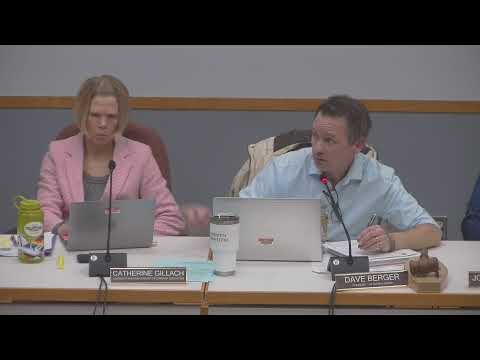
Board members debated the petition after an executive session for attorney consultation. Board member Chris Cleven moved to accept the petition; the motion was seconded by Tom Manley. The roll call vote recorded eight yes votes and one no vote (Hodak). The board’s public motion language accepted the “proposed negotiating unit described in the petition” and directed the board negotiating team to bring language changes to the bargaining table as part of the next negotiation cycle.
Why it matters: The vote determines who the district will recognize for the next round of collective bargaining and affects which certified employees may be represented in negotiations. Petition supporters said preserving the existing negotiated language protects certified staff such as instructional coaches, counselors and other professionals who work in classrooms but are not the teacher of record. Opponents and some board members expressed interest in detailed conversations between bargaining teams before any changes are finalized.
Board discussion and next steps: Several board members said they supported bringing the question to the negotiating table rather than making immediate unilateral changes to contract language. Board member Cleven said he planned to vote to accept the petition but expected negotiation conversations; Board member Hodak announced a no vote on the roll call, citing a desire to ensure all viewpoints were represented before formal recognition. Superintendent Dr. Brenner was not present; administration and the board negotiating team will lead next steps in bargaining as required by the negotiated agreement.
Context and constraints: Speakers referenced Article 12 of the negotiated agreement, which states that the agreement is effective July 2023 through June 30, 2025, and that provisions continue unless either party gives written notice at least 60 days before the anniversary date. Members of the public and union negotiators said changes should be made at the bargaining table, not unilaterally. The transcript record shows the board held an executive session for attorney consultation under North Dakota Century Code before taking the public vote.
The board also acted later in the meeting on a separate petition from building principals' representatives; that petition was separately considered and approved.