Get Full Government Meeting Transcripts, Videos, & Alerts Forever!
Get email alerts on the Rulemaking Adoption topic
No spam. Unsubscribe anytime.
Collection board adopts rulemaking package to redefine ownership change, reorganize prohibited practices
Summary
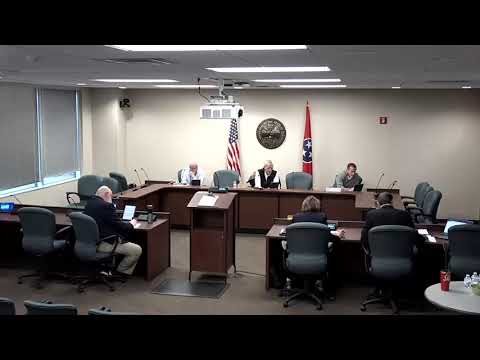
The Tennessee Collection Service Board on Wednesday held a rulemaking hearing and adopted a package of rule amendments that redefines change of ownership, reorganizes prohibited practices and incorporates CFPB Regulation F violations into the chapter's enforcement language.
The Tennessee Collection Service Board on Wednesday, Jan. 8, 2025, held a public rulemaking hearing and voted to adopt a package of administrative rule amendments for submission to the secretary of state.
The package, summarized on the record by board counsel Joseph Wharton, reorganizes the placement of prohibited practices; redefines change of ownership for limited liability companies and corporations to apply when "any change that results in a different person or entity acquiring an aggregate of 50% or more"; removes the requirement that staff contact applicant character references as part of fitness investigations; incorporates violations of 12 C.F.R. section 1006 (Regulation F) issued by the Consumer Financial Protection Bureau into the chapter's list of unfair or deceptive acts; and repeals examinations in connection with licensing.
Wharton explained the role of the rulemaking hearing and the administrative process: proposed rules were filed with the secretary of state, reviewed for legality by the attorney general's office, and will remain in the secretary of state's office for 90 days before becoming effective if approved by the Joint Government Operations Committee. He also read statutory authorities that require periodic review of agency chapters under Tennessee Code Annotated sections cited during the hearing.
No written comments were received by the board office in advance, and no members of the public spoke during the hearing. The board then moved to adopt the hearing-language of the proposed rules as presented; board members approved the motion by roll call.
The board also adopted the rulemaking-related administrative items required by statute: a regulatory flexibility addendum concluding that roughly 25% of affected firms are estimated to be small businesses, an impact-on-local-government statement finding no impact, and the additional information required for the Joint Government Operations Committee. The regulatory flexibility addendum included comparisons to other states: North Carolina and Florida requirements were cited in the hearing record as context for ownership-reporting approaches.
Next steps: as described on the record, the adopted package will be routed for final administrative processingincluding attorney general review, filing with the secretary of state, and a 90-day period before effectiveness if it receives a positive recommendation from the Joint Government Operations Committee.