Lifetime Citizen Portal Access — AI Briefings, Alerts & Unlimited Follows
Five countries install flags as new non-permanent members of U.N. Security Council
Loading...
Summary
Denmark, Greece, Pakistan, Panama and Somalia were formally welcomed as elected non-permanent members during an annual flag installation ceremony organized by Kazakhstan and co-hosted by Algeria; speakers emphasized multilateralism, peace and the council’s role amid global crises.
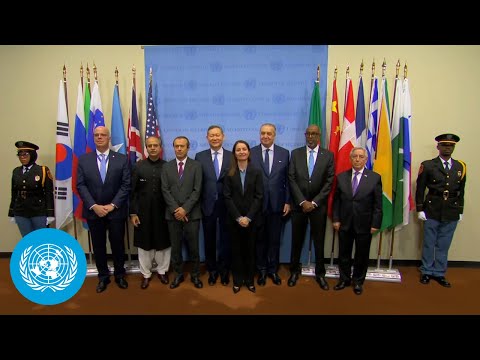
A flag installation ceremony marking the arrival of five newly elected non-permanent members to the United Nations Security Council took place on the first business day of the New Year, where Denmark, Greece, Pakistan, Panama and Somalia were formally welcomed, organizers and speakers said.
The event, organized by Kazakhstan and co-hosted during Algeria’s monthly presidency, brought together permanent representatives and senior U.N. officials who highlighted the role of elected members in shaping council work and reaffirmed commitments to the U.N. Charter.
Kairat Umarov, permanent representative of Kazakhstan and master of ceremonies, said Kazakhstan “transformed [the flag installation] into a respectable ceremony, cherishing the incoming member states to the Security Council” and thanked previous council presidents and organizers for supporting the annual tradition. Umarov noted the ceremony has been run annually since 2018 and called the incoming members’ contributions “vital” to promoting international peace and security.
Algeria’s permanent representative, Ambassador Amar Benjema, who holds the Security Council presidency for January, described the role of an elected member as “an immense privilege” and a “huge responsibility,” and said the world faces “many challenges that are threatening international peace and security,” singling out concern about the situation in the Middle East.
Mohammed Khaled Kiari, assistant secretary-general for the Middle East, Asia and the Pacific in the U.N. Department of Political and Peacebuilding Affairs/Department of Peace Operations, told the new members the Secretariat will provide “customary support” through reporting, briefings and substantive assistance during their two-year terms.
Speakers from the incoming elected members outlined priorities they intend to bring to the council’s agenda. The permanent representative of Denmark said Denmark will defend the U.N. Charter, uphold international law, and work to make the council “more effective, transparent, and inclusive,” including addressing the destabilizing impact of climate change on peace and security and implementing the women, peace and security agenda.
Greece’s permanent representative framed Greece’s tenure as a chance to act “as a stabilizing factor” and to promote the peaceful resolution of disputes, describing its role as a bridge between regions. Pakistan’s permanent representative emphasized Pakistan’s commitment to the U.N. Charter and said Pakistan would be “a strong voice for peoples under foreign occupation and oppression” and would pursue conflict prevention, peacekeeping and peacebuilding tools.
Panama’s permanent representative recalled Panama’s historical role at the Security Council and cited the country’s support for dialogue, mediation and conciliation; in remarks he referenced the council’s 1973 meeting held in Panama City and the later Torrijos–Carter treaties as part of Panama’s diplomatic history. Somalia’s permanent representative thanked U.N. members for electing Somalia and pledged the country’s commitment to the principles of the U.N. Charter, including respect for sovereignty, integrity and political independence.
Delegates then proceeded with the formal flag installation for the five incoming members and a group photograph. Organizers closed the ceremony by thanking participants for their presence and dedication.
While the event was ceremonial rather than a meeting of the Council’s formal agenda, speakers consistently framed the rotation of elected members as important to the Security Council’s deliberations over the next two years and as part of a broader effort to reinforce multilateral cooperation on peace and security.