Get Full Government Meeting Transcripts, Videos, & Alerts Forever!
Get email alerts on the Election Procedures topic
No spam. Unsubscribe anytime.
Senate advances election amendments; sponsor to offer substitute on vacancy process
Summary
Senate Bill 300, a bill addressing election code changes and candidate vacancy procedures, passed the Utah Senate on third reading with a roll call of 24 ayes, 1 nay and 4 absent.
Senate Bill 300, a bill addressing election code changes and candidate vacancy procedures, passed the Utah Senate on third reading with a roll call of 24 ayes, 1 nay and 4 absent.
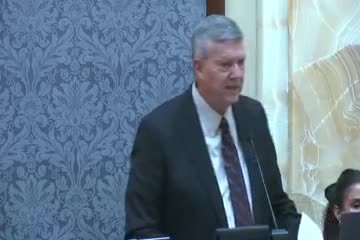
Sponsor Senator McKay said the current proposal would be followed by a substitute (not adopted that day) that narrows the replacement‑election process to three statewide offices — state auditor, state treasurer and attorney general — requires delegates to choose three names for each vacancy and forward those names to the governor, and creates a definition for what a "delegate" is in the code. McKay said the aim is to shift decision authority for short‑term replacements from a smaller state central committee to a larger delegate body.
Floor discussion: Senator Riebe asked why the change forwards three names to the governor rather than letting the delegates' vote directly elect a replacement. Senator McKay replied that the form of the substitute would preserve the governor’s ability to choose from three nominees, consistent with current practice, while increasing participation in the selection of the three nominees. Senator Thatcher placed the change in a broader philosophical context, arguing for greater voter input and praising the bill’s move to expand participation even as she noted imperfections.
Votes and outcome: Senate roll call showed 24 yes, 1 no and 4 absent; the bill passed the Senate and sponsor indicated he will introduce a substitute to refine the candidate‑vacancy provisions.
Provenance: Sponsor remarks and the roll call appear in the Senate floor record; McKay’s explanation of the planned substitute and delegate process were part of his floor presentation.
Ending: The bill cleared the Senate; McKay said he expects to file a substitute to further refine how delegates select nominees and how the three names are forwarded to the governor.