Get Full Government Meeting Transcripts, Videos, & Alerts Forever!
Get email alerts on the Charter Amendments topic
No spam. Unsubscribe anytime.
Bay City councilors discuss five proposed charter changes amid resident concerns about transparency and residency rules
Summary
Bay City council held a workshop to review five proposed charter measures — changes to council terms, meeting schedule, removal of provisions described as duplicative of state law, city-manager duties, and residency waivers for hires — prompting public comment about notice, deletions from the charter and executive-session language.
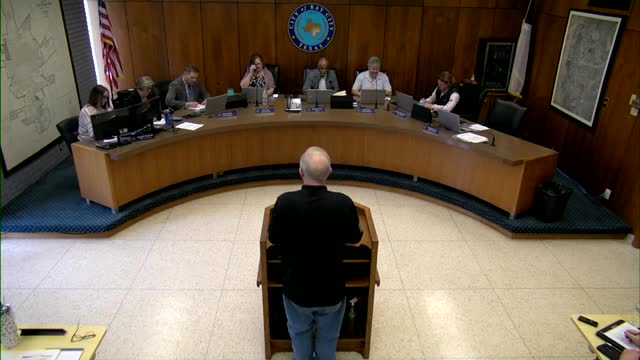
Bay City Council and the mayor met in a workshop to review five proposed amendments to the city charter that would affect council terms, meeting frequency, language the city attorney described as repetitive of state law, the city-manager provisions and a proposed residency waiver for hires outside city limits.
The discussion matters because the changes would alter how the city schedules meetings, how long council members serve, how the charter references state law and who may qualify to serve in city positions — and council members said any changes would go to voters if the council decides to place measures on the ballot.
City staff and council members described the packet of measures as a mix of cleanup language and larger policy choices. Anne Marie, identified in the workshop as the city attorney, said much of the language in “Measure C” traces to recommendations from prior charter commissions and to prior legal review. She told council that for some sections — including those governing elections and executive sessions — state law now prescribes specifics that make verbatim charter language inconsistent or misleading. “If you go read it, you will see it is in conflict with itself,” Anne Marie said, explaining why the city attorney’s office proposed deletions and replacements that reference state law.
Several residents urged caution. Jerry Evans, who identified himself as a former Bay City councilman and a former charter-commission director, said deletions proposed under Measure C would remove “eight pages” of the charter and risk losing local protections. “How do you improve this city by deleting something?” Evans asked, and he urged the council to preserve particular charter language and to add an earlier ordinance (Ordinance 1628) into the record.
Other public commenters focused on notice and transparency. A resident who identified herself as Jessica Duhan (referenced by council during the meeting) and others said the workshop notice posted 72 hours before the meeting felt short and that the public had limited time to review the redline materials. Anne Marie and council members said the meeting had been posted 72 hours beforehand, and that staff would publish education materials and hold additional outreach before any measure goes to the ballot.
On specific measures:
- Measure A (staggered council terms): The measure would shift two council seats to two-year terms so that only two council seats come up for election in a single year, then revert to three-year terms thereafter. Councilmembers said the change aims to avoid years with no elections or years with an unusually large turnover; councilmembers also noted it should not alter existing term-limit math except in the narrow circumstances of filling an unexpired term.
- Measure B (meeting schedule/consent agenda): The measure would codify a one-meeting-per-month minimum and allow scheduling by ordinance; proponents said the change mirrors practice in other Texas cities and gives flexibility for workshops or special meetings when needed. Opponents said reducing scheduled meetings to one per month could limit public engagement and make the council appear less accessible; residents urged preserving robust opportunities for public discussion. Staff noted routine items could be handled by consent agenda and that directors will include executive summaries for consent items so the public can follow actions.
- Measure C (remove charter provisions described as repetitive of state law): Anne Marie said many items in C derive from prior charter-commission recommendations and from earlier legal reviews; items flagged include sections on city powers, eminent domain, executive sessions and references to older statutory citations. Several residents — including Evans — said removing those charter passages could reduce transparency, especially language that currently requires that executive-session subjects be expressed on the agenda and that final action not occur without public notice. Councilmembers debated whether to leave some language in place, defer C to a later ballot, or reference state law in the charter with caveats that section numbers can change.
- Measure D (city-manager provisions / cleanup): Council and staff described D as cleanup to align the charter with the current city‑manager form of government and to resolve internal conflicts between 3.01 (the voters-adopted city‑manager description) and other charter sections. Several councilmembers said the intent is to codify existing practice (an organizational chart approved through the budget process, council review of senior appointments) while removing redundant or conflicting paragraphs.
- Measure E (residency waiver for hires, including city manager): Measure E would permit council to waive the strict residency requirement for hires — for “good cause shown” — so long as the hire resides within a defined geographic area. Discussion at the workshop centered on whether the waiver should be limited to Matagorda County or to a specified mileage or response-time radius from City Hall. One council member proposed a 15‑ to 20‑mile radius as a clearer, easier-to-understand standard; others favored keeping Matagorda County language to give hiring flexibility for candidates who live on rural properties.
Council members and staff repeatedly emphasized that the workshop was a discussion step, not a final vote. Anne Marie said staff would provide a form so individual council members could mark their preferences by specific charter section; those marked forms would be collated to determine what, if any, measures appear on the ballot. The mayor and several councilmembers suggested that, given the complexity and public concern about Measures C and D, the council could delay those two items and move Measures A, B and E forward for the near-term ballot process if the council chooses.
No formal motions or votes were recorded during the workshop. The mayor closed the meeting after public comment and council discussion, and council members said additional outreach and education would occur in the weeks before any ballot placement.
Looking ahead, staff and council agreed on more public education — newsletters, town halls and newspaper notices — and on providing clear redlines that identify precisely which charter sections would be removed or altered so voters can compare current text with proposed changes.