Get Full Government Meeting Transcripts, Videos, & Alerts Forever!
Get email alerts on the Secure Dc Pretrial topic
No spam. Unsubscribe anytime.
Council extends Secure DC pretrial detention provisions on emergency basis; temporary timeframe to be shortened before second reading
Summary
The Council unanimously approved an emergency extension of pretrial detention provisions enacted in Secure DC to give the Criminal Justice Coordinating Council (CJCC) more time to finish an evaluation report. Councilmembers committed to shorten the temporary extension's review window before second reading.
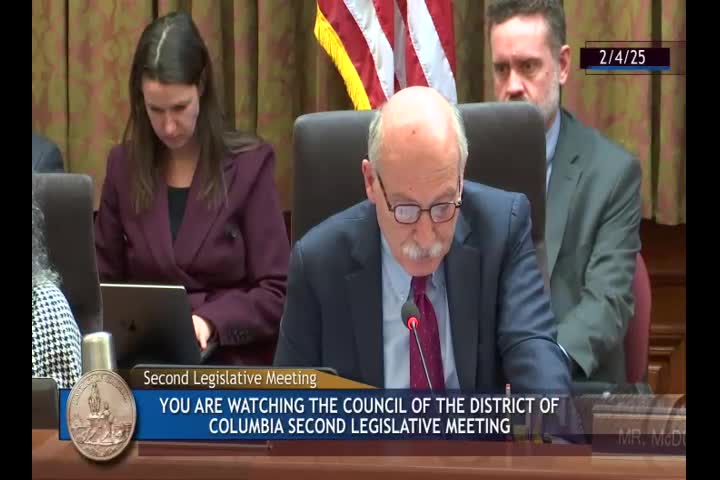
The Council of the District of Columbia voted unanimously to adopt an emergency declaration extending the rebuttable-presumption pretrial detention provisions enacted in the Secure DC package, and the Council advanced a temporary bill for first reading to allow time to review an incoming CJCC report.
Why it matters: The Secure DC changes expanded the rebuttable presumption for pretrial detention for certain violent offenses; the Council adopted an emergency 90-day extension after the Criminal Justice Coordinating Council said it needs more time to complete required reports evaluating those changes. Councilmembers stressed that the extensions are meant to preserve the temporary policy while the Council reviews data, and several members insisted any further extensions should be limited.
Councilmember Pinto explained the rationale: CJCC needs 90 additional days to finish reports the Council had requested so it can evaluate the impact of the pretrial provisions. Pinto said the emergency extends the relevant provisions to ensure the Council can receive the CJCC report and then act. Pinto also moved a temporary extension (Bill 20682) for first reading and committed on the record to moving an amendment before second reading to shorten the review window to a period some members have suggested (45–60 days).
Several members voiced concern about indefinite or repeated renewals. Councilmember Lewis Judge (transcript name: Lewis Judge) said he would vote for the present emergency but warned he would not support any further extension beyond the stated period because the original intent was for a temporary, evidence-driven assessment. Councilmember White (who spoke in favor) and others emphasized the need to evaluate data and to act in a timely way.
The emergency declaration (PR26-48) was approved unanimously, and the temporary bill (Bill 20682) passed first reading with a recorded commitment from Councilmember Pinto that Council staff will present a shorter timeline amendment at second reading. Councilmember Parker was recorded present for related votes.
What was decided: The immediate emergency keeps the pretrial provisions in effect while CJCC completes its work. Counsel and moving members agreed to pursue a shorter review window in the temporary bill at second reading; no further substantive changes were adopted at first reading.
Next steps: CJCC is to finish its report within the extended emergency timeline (the emergency sets a CJCC report deadline of May 7 in the record). Councilmembers committed to consider an amendment between first and second reading to shorten the temporary bill’s review period — options discussed included 45 or 60 days — and some members warned they will oppose further extensions beyond the new timetable.