Get Full Government Meeting Transcripts, Videos, & Alerts Forever!
Get email alerts on the Public Health topic
No spam. Unsubscribe anytime.
Planning staff outlines options to regulate vape and tobacco retailers; council weighs distance rules and licensing
Summary
Planning staff presented a study of local and regional regulatory approaches to vape and tobacco retail sales and offered options such as distance restrictions from schools, separate definitions for vape shops, licensing tweaks or a new land‑use category in the Unified Development Code.
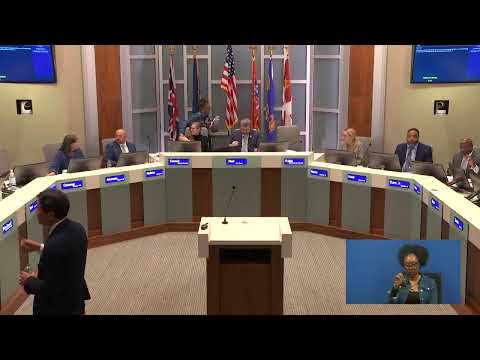
City planning staff on Jan. 29 presented a study on possible local regulations for tobacco and vape retailers, including options for distance restrictions, licensing and zoning to reduce youth exposure and regulate storefront marketing and location.
Vance Baldwin, assistant planning director, summarized the research the office conducted across Louisiana municipalities and peer cities in the Southeast. "We looked at the range of approaches," Baldwin told the council. "Some places treat these as a retail sale and others have specific categories and distance requirements. Each approach has trade‑offs for enforcement and for how quickly regulations adapt to new products."
The study identified several options for council consideration: - Maintain current practice and rely on Title 12 (Clean Air Act) and general retail rules; - Create a new ordinance adding definitions for vapor and alternative nicotine products and apply 300‑foot distance requirements from schools, day care centers and parks; - Amend the Unified Development Code to add a new land‑use category for vape/tobacco shops, potentially using conditional uses with public review; or - Pursue a licensing model similar to alcohol licensing, with stronger permitting and compliance resources (a more resource‑intensive approach).
Baldwin noted enforcement and definitional challenges because vape and related products evolve quickly and frequently shift market forms. The state’s Vapor and Alternative Nicotine Products Directory (an administrative list enforced by the Office of Alcohol and Tobacco Control) requires many products to be FDA‑approved and listed — a factor the local code changes must consider when defining regulated products.
Public speakers urged stricter limits. "We have a 14‑acre park and just across from it is a vape shop," said Muriel Harrison, executive director of the Gardere Initiative, who asked the council to adopt protective rules to shield children and families from retail exposure and from marketing that appeals to youth.
Councilman Rowdy Godet (coauthor of the study request) said he favors a new chapter in Title 9 to define vape shops and specify location requirements that would bar them from locating near schools and parks. He acknowledged the challenge of drafting durable definitions as products change but said the city should use peer models and adjust as needed.
Staff recommended the council consider a targeted ordinance that (1) creates clear definitions and (2) treats vape products distinctly from combustible tobacco for the purposes of distance and land‑use controls, combined with permit or occupancy‑permit checks so new retailers must disclose the nature of products sold. Baldwin noted that conditional‑use approaches add roughly 90 days to permitting and require additional plan submissions, which is a trade‑off between regulatory oversight and time/cost for prospective businesses.
No new ordinance was adopted; council members asked planning staff and the parish attorney’s office to prepare draft language and to coordinate with public‑health stakeholders and enforcement agencies. The item will return to a future meeting if an authoring member introduces a draft ordinance.
Why it matters: Retail location and licensing rules can reduce youth access and exposure to vaping and tobacco advertising. The council must balance public health goals, enforcement capacity and the legal framework of state product regulation.
Next steps: Staff will draft proposed ordinance language and work with the parish attorney and public‑health partners to return a recommended approach to the council for a future vote.