Get Full Government Meeting Transcripts, Videos, & Alerts Forever!
Get email alerts on the Procurement topic
No spam. Unsubscribe anytime.
Independent review finds procurement progress but gaps in supplier diversity; council OKs emergency presentation
Summary
An independent report commissioned by the council found improvements in purchasing timelines but identified administrative bottlenecks and weak supplier‑diversity outcomes; the council received the report and discussed a $1 million federal grant to expand diversity and procurement capacity.
An independent review of the City‑Parish purchasing process found measurable improvements over the past three years but persistent administrative friction and low participation by certified minority vendors, Metropolitan Council members heard Wednesday.
John Kim, founder of the District Management Group and lead author of the review, told the council the average processing time for many purchase orders and contracts has fallen, but that a high percentage of requisitions are still “held” or rejected for administrative or documentation reasons. "The process is there, but the way it gets executed — the communication, the documentation and the workflows — is where a lot of the delays happen," Kim said.
Kim’s team presented quantitative findings: contract processing time dropped substantially in 2021–2023 for many classes of procurement, but roughly 40% of contracts and 13% of purchase orders were marked as held or rejected at some point in the workflow during the studied period. The review examined root causes and categorized them: missing documentation and administrative errors were the largest drivers, followed by collaboration and budgeting issues.
The council specifically directed attention to supplier‑diversity performance. The report found that certified minority vendors received about 6% of procurement dollars in 2023 (up from about 1% in 2021 for purchase orders), far short of the council’s stated target of 25 percent. Kim said other peer cities with similar programs track higher percentages and operate more mature supplier‑diversity offices.
Paul Narcisse, purchasing director for the Parish, and Arvin Jones, the parish’s recently appointed supply‑diversity manager, told the council the work is underway to improve outreach, technical assistance and data capture. "We have 362 certified vendors in Baton Rouge," Jones said. "We need time and active outreach — vendors need training, we need to get community partners involved, and we have to fix data issues so we can report reliably." Jones added that certification and reporting systems used by other municipalities (and planned local tools such as B2Gnow) can help automate tracking.
The council also heard that the administration has secured a roughly $1 million federal grant to help stand up supplier‑diversity staffing, outreach and technical assistance. Purchasing Director Narcisse said the grant funds will be used for a mix of temporary staff, outreach and contracts with local partners; the administration expects the funds to fund positions and initiatives for several months while they seek sustainable staffing or additional funding.
Council members urged faster, clearer training and better vendor-facing materials to reduce administrative holds. Councilwoman Adams asked for clarification about the study’s spend calculations and whether totals reflected eligible spend only. Kim recommended additional data work to isolate eligible spend, which can change the interpretation of performance rates for diversity goals.
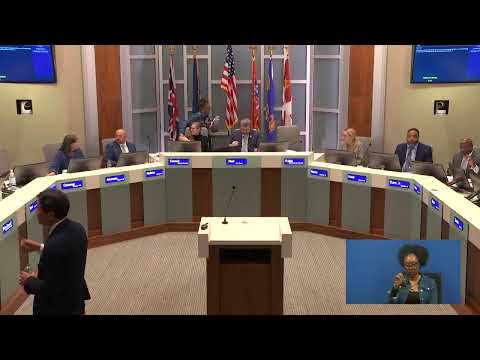
The council declared the procurement report an emergency item so the review could be heard at the Jan. 29 meeting; the mayoral administration presented the findings and answered council questions. Council members praised the progress and pressed the administration to deliver a timeline for implementing the report’s recommendations, including standardized standard operating procedures, staff training, the B2Gnow procurement portal and a public outreach plan for small and minority vendors.
Why it matters: Procurement practices determine how quickly the parish can buy services and goods, how equitably contracting dollars are distributed, and how smoothly projects proceed. Improving administrative workflows and tracking is a prerequisite for meeting supplier‑diversity goals.
Next steps: The purchasing office is already piloting better workflows and plans to deploy a vendor‑management system (B2Gnow) compatible with the parish’s financial system; staff will prepare implementation timelines and training modules and return to council with follow-up reports.