Get Full Government Meeting Transcripts, Videos, & Alerts Forever!
Get email alerts on the Taxes Millage topic
No spam. Unsubscribe anytime.
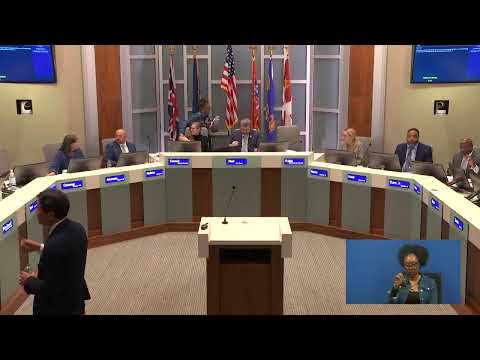
Metropolitan Council deadlocks on public-safety millage roll-forwards after hours of testimony
Summary
After hours of public testimony from firefighters, union leaders and community groups, the Metropolitan Council failed to approve proposed roll-forwards of several public-safety millages and rejected a motion to defer the issue for further consideration.
The Metropolitan Council on Wednesday debated whether to roll forward a set of public-safety millages — changes that would keep tax rates aligned with property reassessments and increase funding for local fire and police districts — but failed to approve the measure after extended public comment and lengthy council discussion.
The roll-forward package would have increased several existing millage rates, including Baton Rouge municipal fire salaries and benefits from 5.68 mills to 6.00 mills and a city three‑platoon police tax from 0.82 mills to 0.87 mills. Supporters said the modest increases were needed to preserve staffing, equipment and insurance ratings for small fire districts across the parish.
Supporters included local fire chiefs, union leaders and volunteer fire district representatives who said the extra revenue is critical to maintain response capacity. "This money goes strictly to our salary and benefits, and we use this as a recruitment tool and retention," said Carol Campbell, chief of the Brownsville Fire Department. "A fire truck today costs you over $1,000,000. Ten years ago you could buy one for less than $300,000. We just don't have the money to really put this stuff in motion." Jake Morgan, president of the Baton Rouge Firefighters Union, said rolling forward was a practical response to rising costs and reassessments, arguing that cuts would harm services and raise homeowner insurance rates by lowering fire ratings.
Opponents and some council members argued the roll-forward functions like a tax increase without a public vote and expressed concern about fairness and precedent. "The roll forward is a tax — it's us unilaterally putting a tax on people without them agreeing to it on an unrealized gain," said Councilman Gode (first name not specified in the record), describing his objection to raising tax collections based on property revaluation rather than voter approval.
Council members also raised procedural and equity questions. Councilwoman Rocca walked through the estimated parishwide revenue impacts provided by staff because she said constituents needed to understand the real dollar effect. For a $250,000 home, she said, the municipal fire roll-forward would cost about $8 a year and the three‑platoon police tax roughly $1.25 a year; within small fire districts, costs varied, with some district adjustments equating to $40–$50 annually for that same example.
The council considered two competing motions. Councilman Aaron Mote moved to defer the whole roll-forward package for 60 days to permit more time to consider related requests — notably a separate request from the East Baton Rouge Council on Aging — but that motion failed on a recorded vote. Later a motion to approve the roll‑forwards, moved by Councilman Moggs and seconded by Councilwoman Raca, also failed on the council’s voting machines; the clerk announced the motion did not carry.
The public record shows broad participation: multiple fire chiefs, volunteer district representatives and the union addressed the council, and several council members offered substitute motions and proposals to include or exclude specific taxing authorities. Council members who said they supported roll-forwards in principle indicated they wanted a consolidated package that included all entities that had requested roll-forwards, including the Council on Aging; others said they would support tax increases only if voters approved them.
With both the deferral and the approval motions failing, the council did not adopt the roll-forward adjustments at the Jan. 29 meeting. The issue may return to a future agenda if an authoring council member reintroduces revised language or a different package.
Votes and formal motions recorded in the meeting: - Motion: Defer roll-forward package for 60 days. Mover: Councilman Aaron Mote. Second: Councilwoman Hurst. Outcome: Failed (recorded vote; tally not specified in transcript). - Motion: Approve roll-forward package (all listed millages). Mover: Councilman Moggs. Second: Councilwoman Raca. Outcome: Failed (recorded vote on voting machines; tally not specified in transcript).
Why it matters: The roll-forward process directly affects funding for firefighting, ambulance and police services and, therefore, local insurance ratings and response capacity. A decision to roll forward or not will influence whether small fire districts can maintain equipment and staffing or must seek additional revenues or cuts.
Next steps: The matter was not resolved and could be reintroduced on a future agenda; council members discussed options for reworking the package and for separately considering some taxing authorities, including the Council on Aging’s request, before taking further votes.