Get Full Government Meeting Transcripts, Videos, & Alerts Forever!
Get email alerts on the Housing Development Data Correction topic
No spam. Unsubscribe anytime.
City staff correct multifamily count, say Denton added roughly 16,600 rental units since 2020
Summary
Haley Zgierski, assistant planning director for the City of Denton, told the Planning & Zoning Commission on Feb. 12 that staff had discovered a data error that materially undercounted multifamily housing in the city’s 2020 baseline and that corrected figures from CoStar raise the 2020 multifamily inventory from 4,550 to 17,459 units.
Haley Zgierski, assistant planning director for the City of Denton, told the Planning & Zoning Commission on Feb. 12 that staff had discovered a data error affecting the city’s multifamily unit counts and has replaced the flawed dataset with one from CoStar.
Zgierski said the county appraisal data originally used for the 2020 multifamily baseline had been paired incorrectly with the city’s GIS, and items that did not match on address or complex name were dropped. Staff now uses CoStar for the multifamily inventory and reports a 2020 multifamily count of 17,459 units rather than the 4,550 figure the presentation previously used; the corrected series shows about 22,000 multifamily units in 2023.
The error affected only the multifamily baseline, Zgierski said, and not single-family counts, rental rates or other measures. Using the corrected counts, staff estimated about 4,000 multifamily units under construction and about 8,000 in various stages of review, adding roughly 16,672 multifamily units since 2020 — a 96% increase from the comp plan’s 2020 baseline. Staff told commissioners the corrected figure reduces an earlier public headline that suggested a 303% increase to a substantially smaller but still sizeable growth rate.
Why it matters: the 2020 Denton 2040 comprehensive plan projected housing needs based on a 3.19% growth rate; more recent U.S. Census American Community Survey estimates indicate a higher local growth rate (about 4.4% annually from 2020–2023). If that higher rate continues, comp-plan estimates for required housing by 2040 would be far larger. Zgierski said staff compared the comp-plan projections to a 2021 affordable housing needs assessment; both the assessment and the higher-growth projection point to a substantially larger future demand for rental and ownership units than the 2020 comp plan anticipated.
Details cited by staff: - Corrected 2020 multifamily baseline (CoStar): 17,459 units (previously reported as 4,550 from DCAD pairing error). (Haley Zgierski) - Multifamily units in 2023: about 22,000. (Haley Zgierski) - Multifamily additions since 2020 (constructed + in review): roughly 16,672 units (staff total). (Haley Zgierski) - Single-family units: DCAD-based count of about 31,800 units in 2020 and roughly 36,000 in 2023; roughly 7,041 lots in construction and about 26,090 single-family lots in review. (Haley Zgierski)
Commissioners asked several clarifying questions during the presentation about student enrollment data, whether enrollment figures were annual or full-time only, the classification differences between duplex/horizontal multifamily in permit data, and the implications for affordability. Zgierski said university enrollment figures used were annual enrollment (not broken into full- or part-time for the dataset staff received) and cautioned that some students may be commuters not living inside city limits.
What staff recommended: continue periodic monitoring of housing supply and demand; consider updating the comprehensive plan and housing needs assessment within five years if higher growth persists; encourage a broader housing mix (ownership and rental) and consider incentives or code changes to support infill and ownership opportunities as well as rental stock.
Commissioners’ response and next steps: commissioners pressed for more granular enrollment and affordability information, asked staff to examine permit classifications (duplex vs. horizontal multifamily), and suggested staff prepare clearer public communications explaining the corrected numbers. Staff said it had informed the city manager’s office and city council and planned to include the corrected dataset in an upcoming Friday report to council.
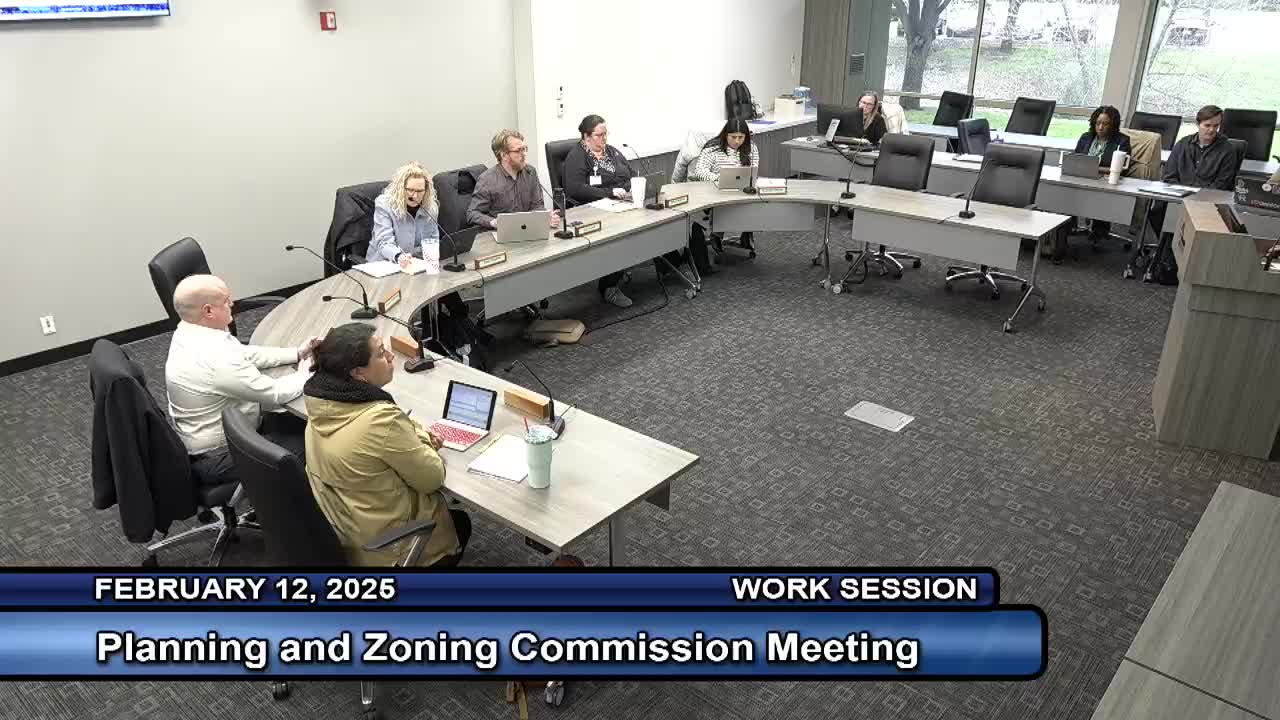
The presentation was part of the Planning & Zoning Commission work session on Feb. 12, 2025. The commission did not take formal action on this item; staff will forward the corrected presentation and data to City Council for their information.
Ending: Zgierski told the commission that staff would present follow-up items on incentives and infill tools at future sessions and reiterated the recommendation to monitor and, if needed, update planning documents to reflect evolving growth patterns.